FAQ
Is 'I didn't see you' a valid defense in a protest?
Rarely. In competitive racing, it is the driver's responsibility to be aware of their surroundings. If telemetry shows a car was alongside, the driver moving into that space is usually found at fault.
How do stewards distinguish between a racing incident and negligence?
Stewards look at whether the driver took reasonable steps to avoid contact. If a driver turns into another car because they didn't check their radar or spotter, it is often classified as negligence.
Are drivers required to have triple monitors or VR?
No, but drivers on single monitors are expected to use alternative tools like radar overlays, spotters, or look-left/right buttons to maintain awareness.
Do radar overlays and spotters impact stewarding decisions?
Yes. If a driver ignores a clear 'car right' spotter call or a red proximity indicator on their radar, the penalty for a resulting collision is often more severe.
How does FOV affect Lap 1 safety?
Poor FOV limits peripheral vision, making it difficult to track multiple cars in close proximity, which is the leading cause of avoidable mid-pack collisions at the start of a race.
Beyond the FOV Police: Why Spatial Awareness is a Stewarding Requirement
beyond-the-fov-police-spatial-awareness-stewarding
Explore why spatial awareness is a core requirement in sim racing stewarding and how FOV settings impact liability in competitive race incident reviews.
The 'I Didn't See You' Defense: A Steward’s Perspective
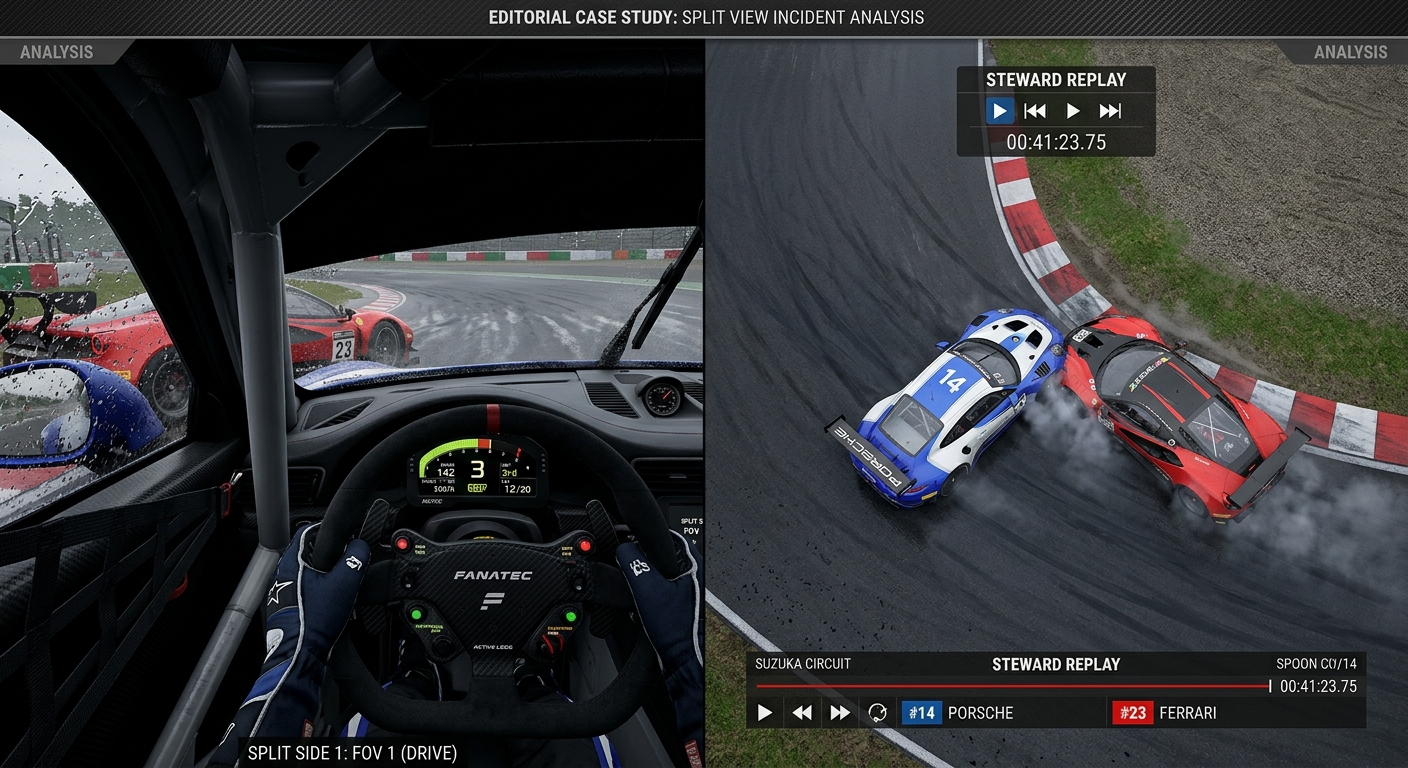
The most common phrase heard in a post-race protest channel is I didn't know he was there. While this may be true from the driver's perspective, stewards view incidents through a lens of objective liability. In most competitive leagues, a driver is responsible for the space they occupy. If a collision occurs because a driver moved into a lane already occupied by an opponent, the fact that the opponent was in a blind spot does not automatically absolve the driver of blame. Stewards must look at whether the driver had a reasonable expectation that a car could be there based on the preceding corners and the proximity shown in telemetry. A lack of visual confirmation is rarely accepted as a total defense when the driver's own setup is the cause of the blindness.
FOV and the Physics of Avoidable Contact
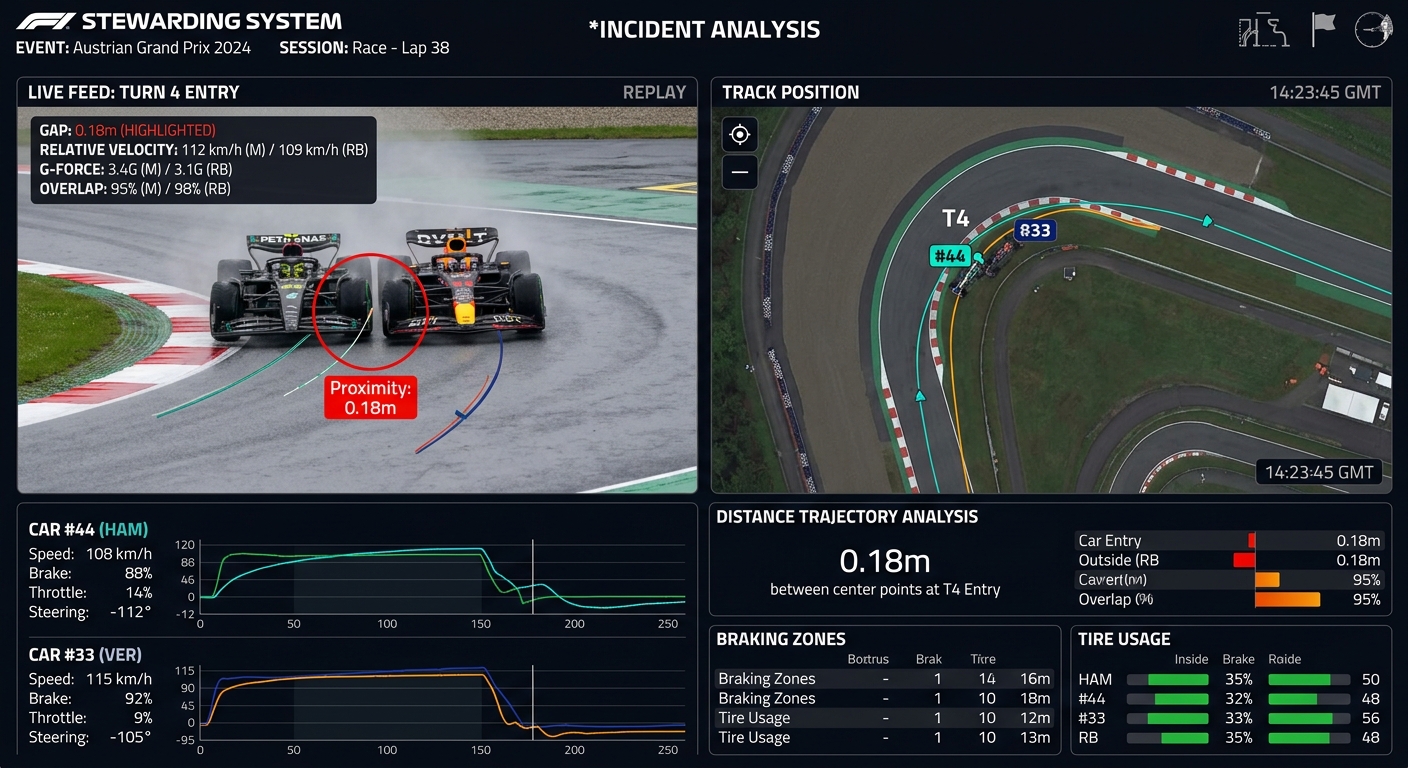
Field of view directly impacts a driver's perception of speed and distance. An incorrect FOV can make a corner apex appear further away than it is, leading to late braking and lunges that end in disaster. More importantly, a restricted FOV removes the peripheral vision required to navigate side-by-side through technical sections. When drivers cannot see the car next to them, they tend to drift toward the optimal racing line as if they are alone on the track. This leads to Lap 1 incidents where multi-car pileups are triggered not by aggression, but by a simple lack of environmental awareness. Stewarding reviews often show that these incidents were avoidable if the driver had a better sense of the space around their virtual car.
Competitive Integrity: Is it Negligence to Race with Blind Spots?
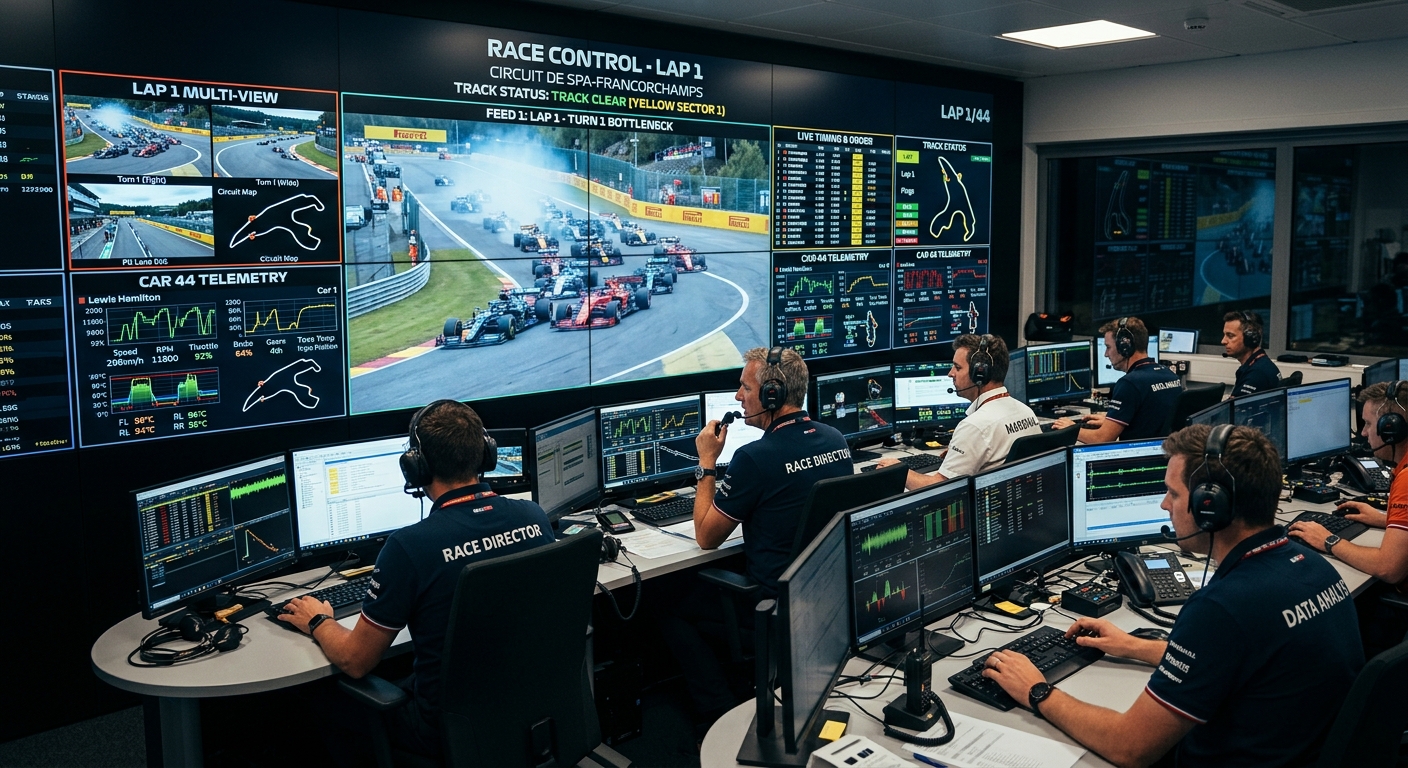
Competitive integrity relies on the assumption that all participants are capable of racing safely. If a driver chooses to race with a setup that prevents them from seeing cars alongside, they are effectively entering the track with a self-imposed handicap that endangers others. Many elite leagues are beginning to view persistent blind-spot incidents as a form of negligence rather than a racing incident. Just as a driver is responsible for maintaining their brake hardware, they are responsible for their spatial awareness. Whether through high-end triple monitors, VR, or digital aids, the burden of awareness lies with the person behind the wheel. Stewards are increasingly penalizing drivers who fail to use available tools to compensate for their hardware limitations.
Master Your League's Competitive Integrity
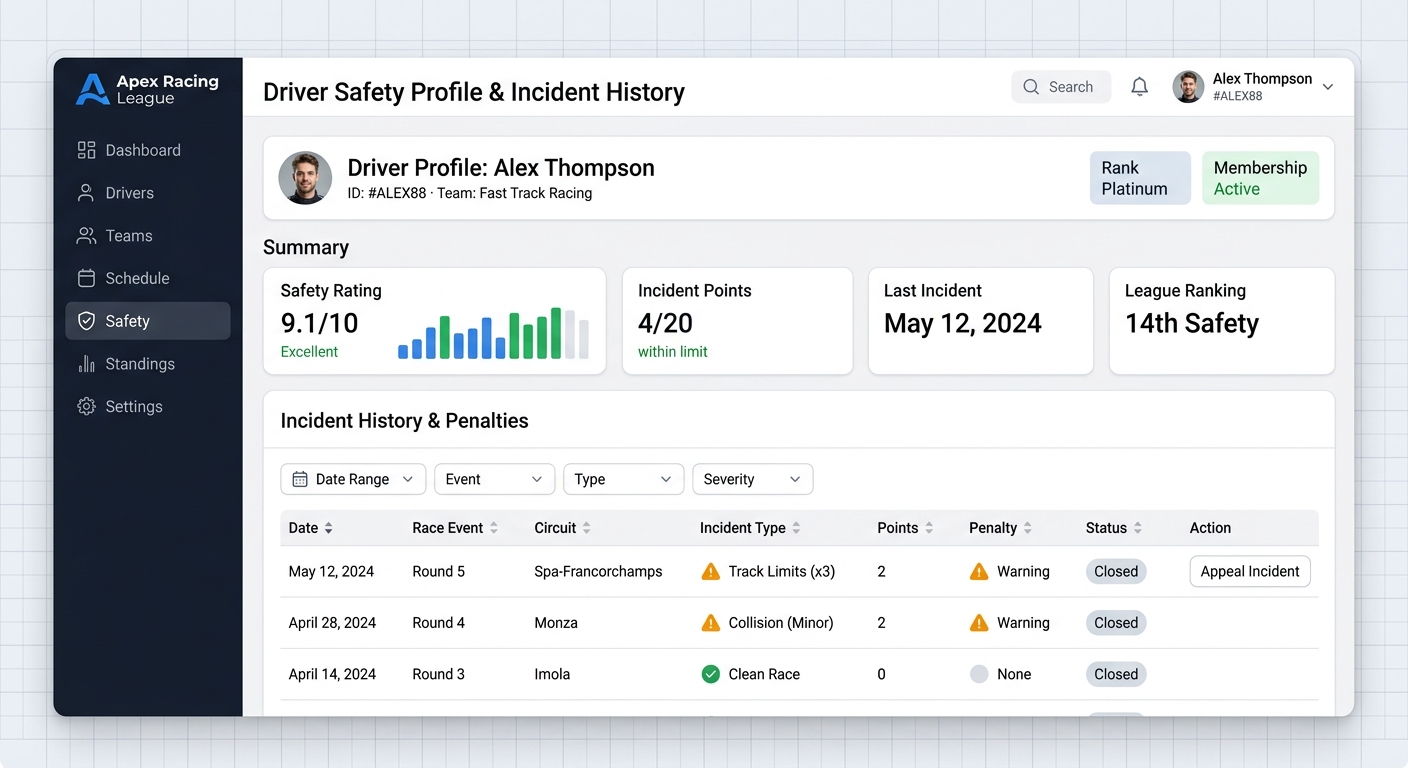
Managing protests and evaluating spatial awareness incidents shouldn't be a manual headache. FairGrid provides league organizers with powerful tools to track safety ratings, review incidents with precision, and maintain a high standard of competitive integrity. Empower your stewards with the data they need to make fair, objective decisions.