FAQ
Is a hardware disconnect considered a racing incident?
Usually no. Most competitive leagues treat hardware failure as driver error because the participant is responsible for the reliability of their own equipment.
Can stewards see if my wheel actually disconnected?
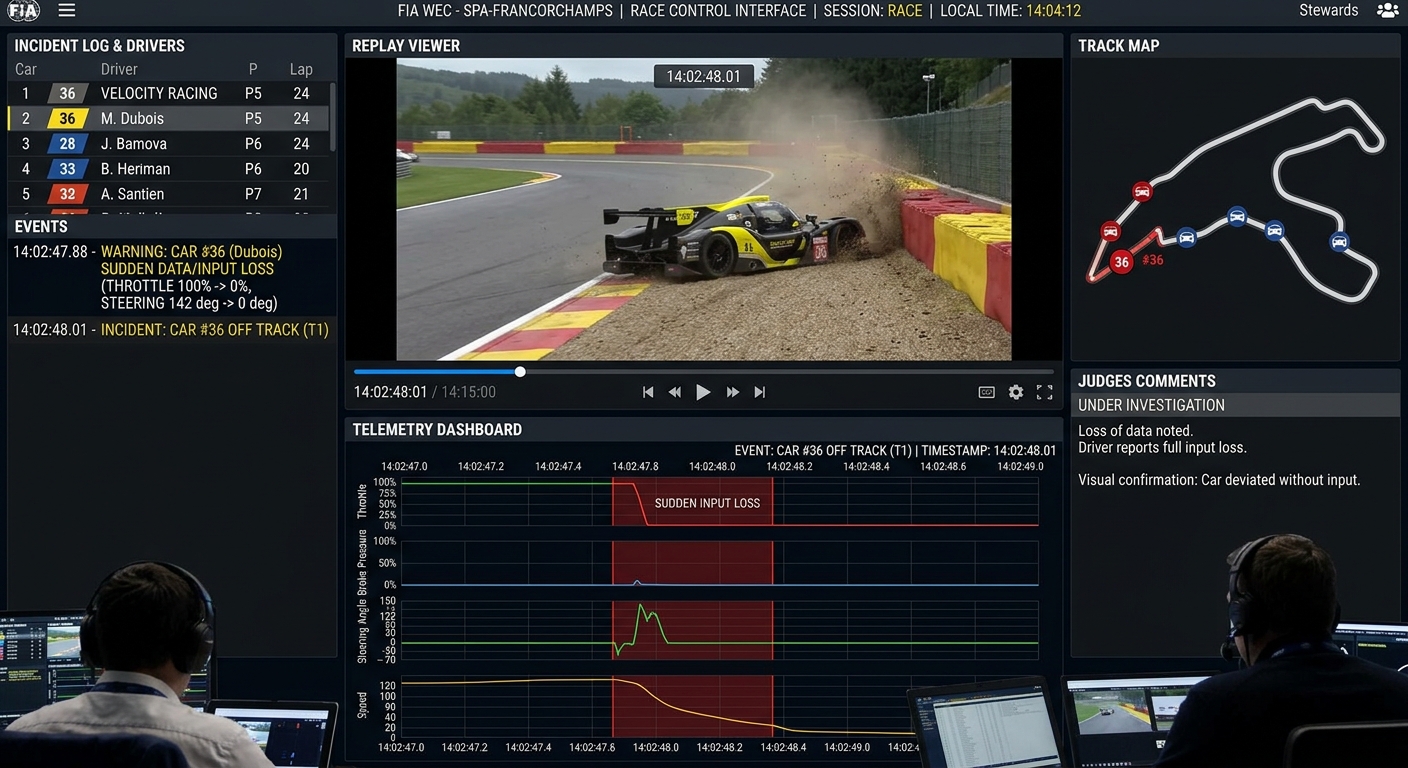
Stewards can analyze telemetry logs for frozen inputs or sudden data drops which are characteristic of a hardware timeout rather than human error.
Should I be penalized if my pedals flicker and cause a crash?
Yes. If equipment instability causes an incident with another competitor, a penalty is typically applied to uphold the integrity of the competition.
How can I prevent hardware-related penalties?
Conduct thorough pre-race checks on USB connections, update firmware, and use a powered USB hub to ensure signal stability during long sessions.
Does FairGrid help track recurring hardware excuses?
Yes, FairGrid allows stewards to log incident types, helping identify drivers who frequently use hardware malfunctions as a defense for incidents.
Hardware Failure or Driver Error? How Stewards Judge 'Mechanical' Incidents in Sim Racing
hardware-failure-vs-driver-error-sim-racing-stewarding
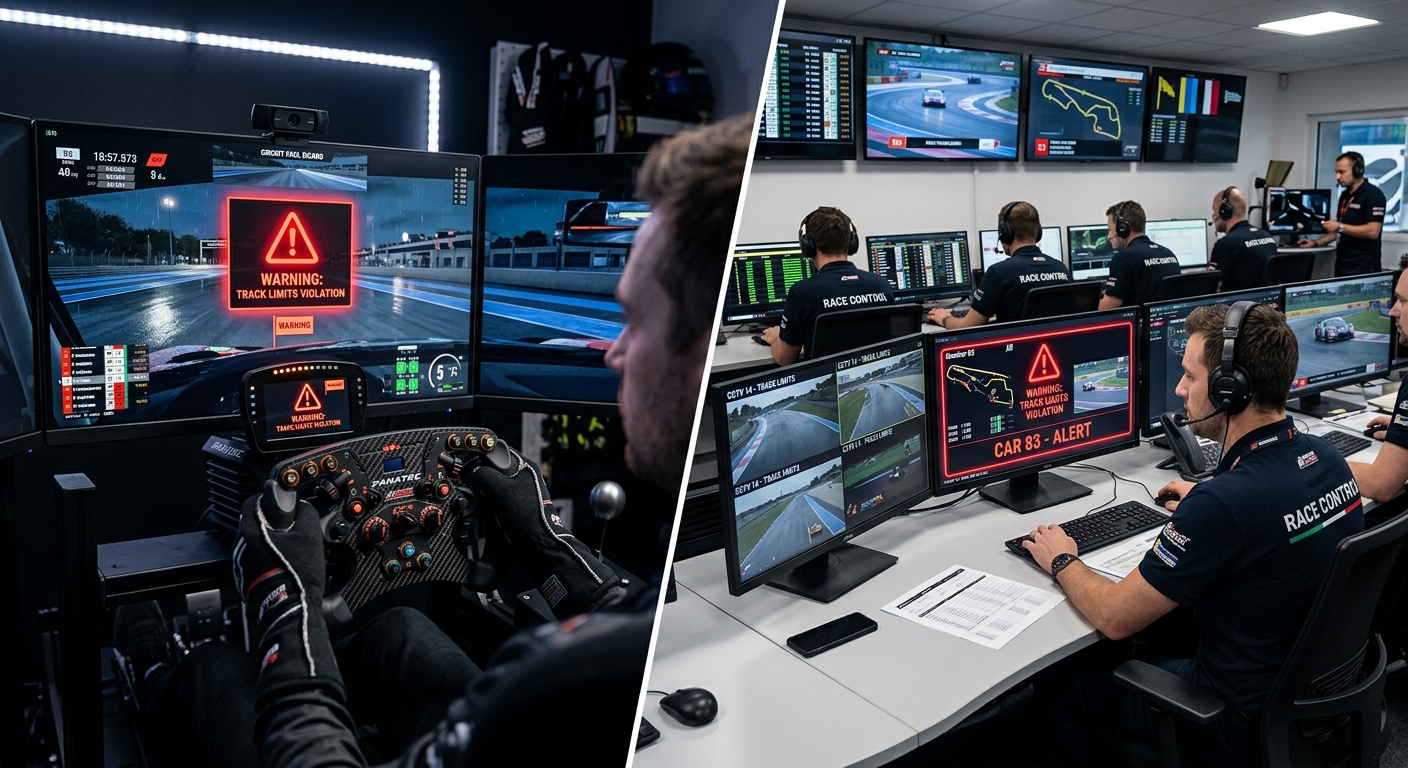
Learn how sim racing stewards distinguish between genuine hardware failures and driver errors using telemetry to maintain competitive integrity in professional leagues.
The 'My Wheel Disconnected' Dilemma
The hardware failure defense is one of the most common appeals in racing protests. A driver involved in a multi-car collision might claim a sudden loss of Force Feedback or a pedal sensor spike. While these issues are technically real, stewards must treat them with skepticism to prevent abuse. Without a clear framework for judging these incidents, leagues risk rewarding poor equipment maintenance or, worse, providing a loophole for drivers to avoid penalty points after a self-inflicted error. Standardizing how these claims are handled is the first step toward a professional racing environment.
Defining Driver Responsibility: Is Your Hardware Your Problem?
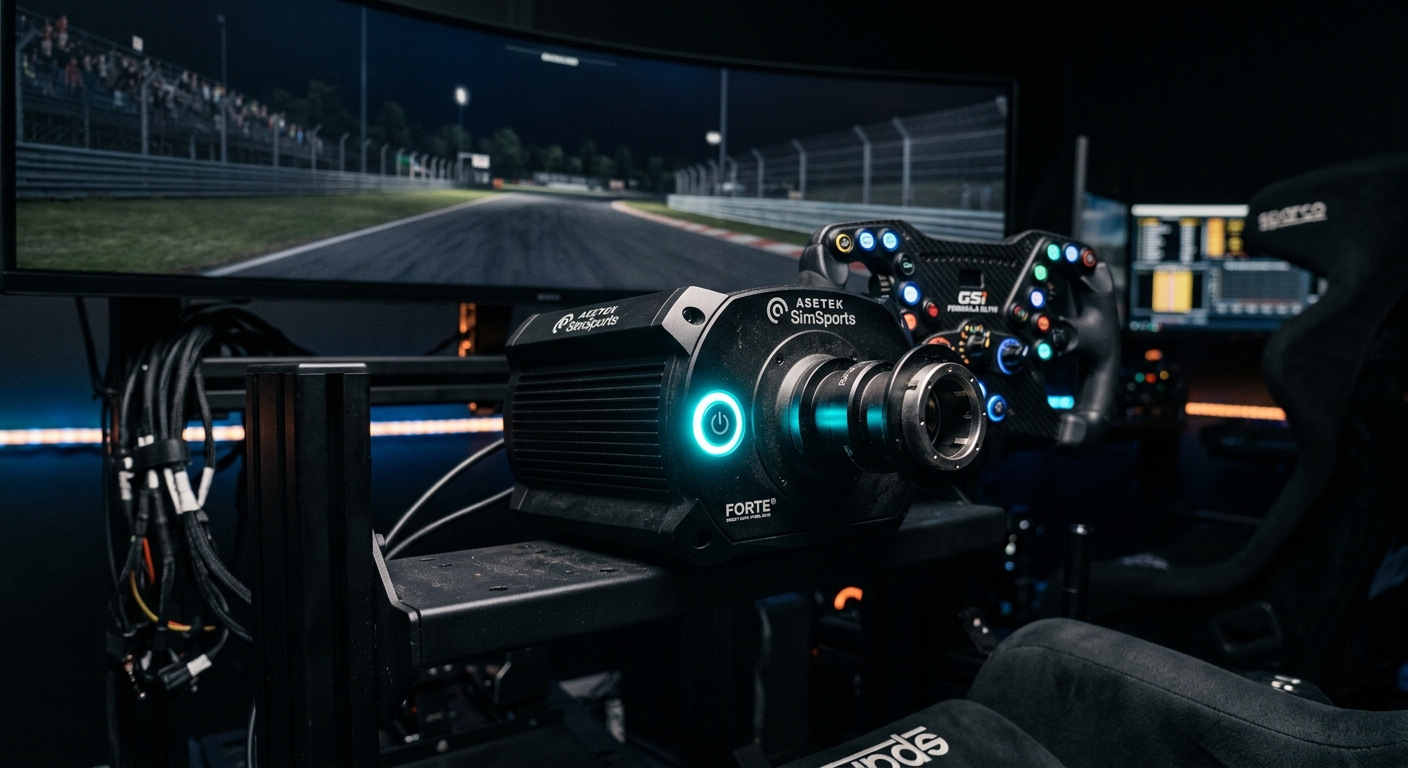
Most professional sim racing leagues operate under the 'Your Equipment, Your Responsibility' rule. Just as a real-world racer is responsible for the mechanical state of their car, a sim racer is responsible for the stability of their USB connections, drivers, and peripherals. Stewards generally view disconnects as a forced retirement rather than a no-fault incident. If a driver's hardware causes a pileup, the intent may be absent, but the negligence in maintaining a stable racing environment remains a factor for race control to penalize to ensure fairness for the victims of the crash.
How Race Control Detects False Hardware Claims via Telemetry
Modern stewarding tools allow for deep dives into telemetry and input logs. When a driver claims a pedal flicker, stewards look for erratic, non-human input patterns in the data. A genuine disconnect usually shows a flat-line or a last known value freeze, whereas a driver trying to save a slide will often show frantic, albeit late, corrections. Using automated stewarding platforms like FairGrid, organizers can track if specific drivers have a recurring pattern of hardware issues that conveniently occur only during defensive maneuvers or lost battles, helping identify systemic reliability issues versus tactical excuses.
Enhance Your League's Integrity with FairGrid
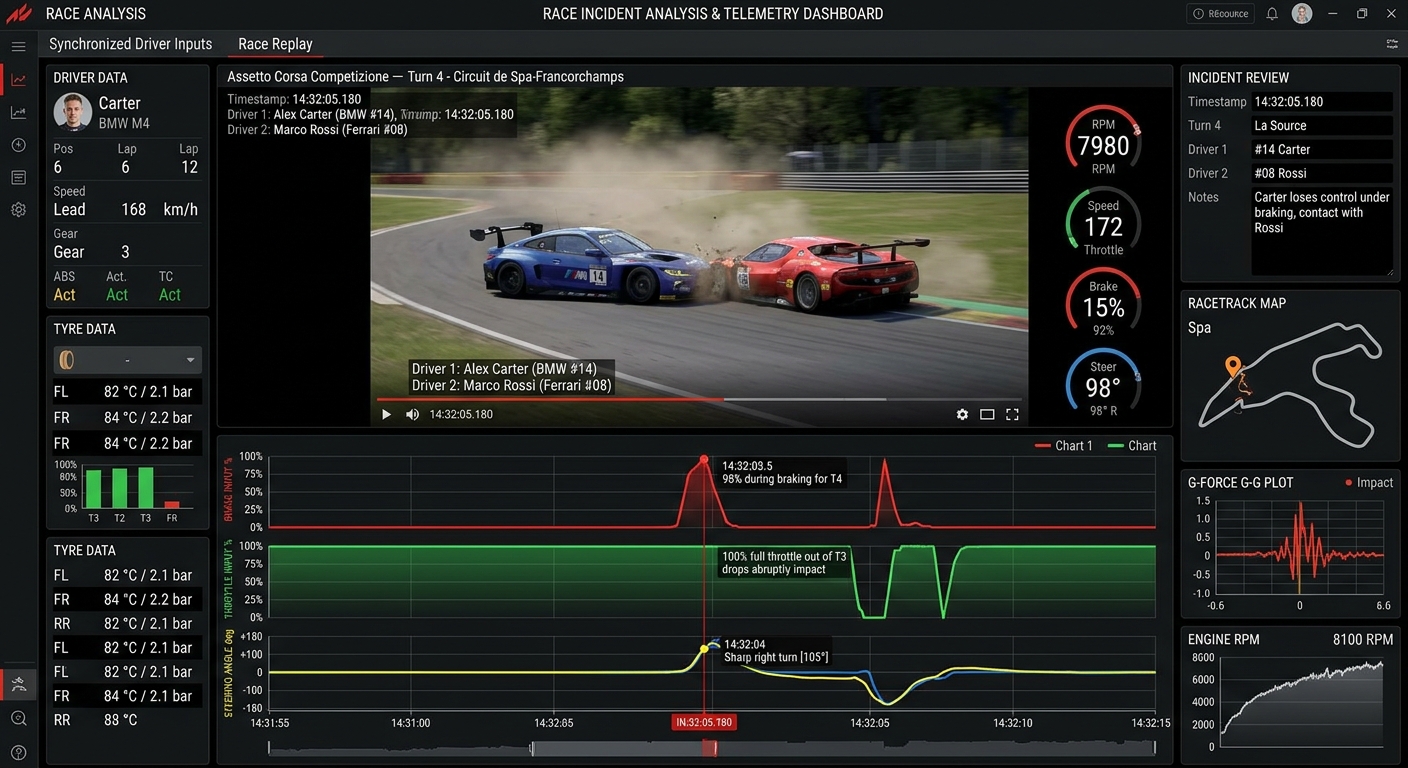
Stop guessing and start adjudicating with precision. Use FairGrid’s automated tools to manage protests and track driver history, ensuring that hardware excuses don't undermine your competition.