FAQ
Is a hardware failure a valid defense in a protest?
Rarely. While it may reduce a penalty from a disqualification to a minor warning, drivers are generally responsible for their equipment's reliability.
How can I prove my wheel disconnected during a race?
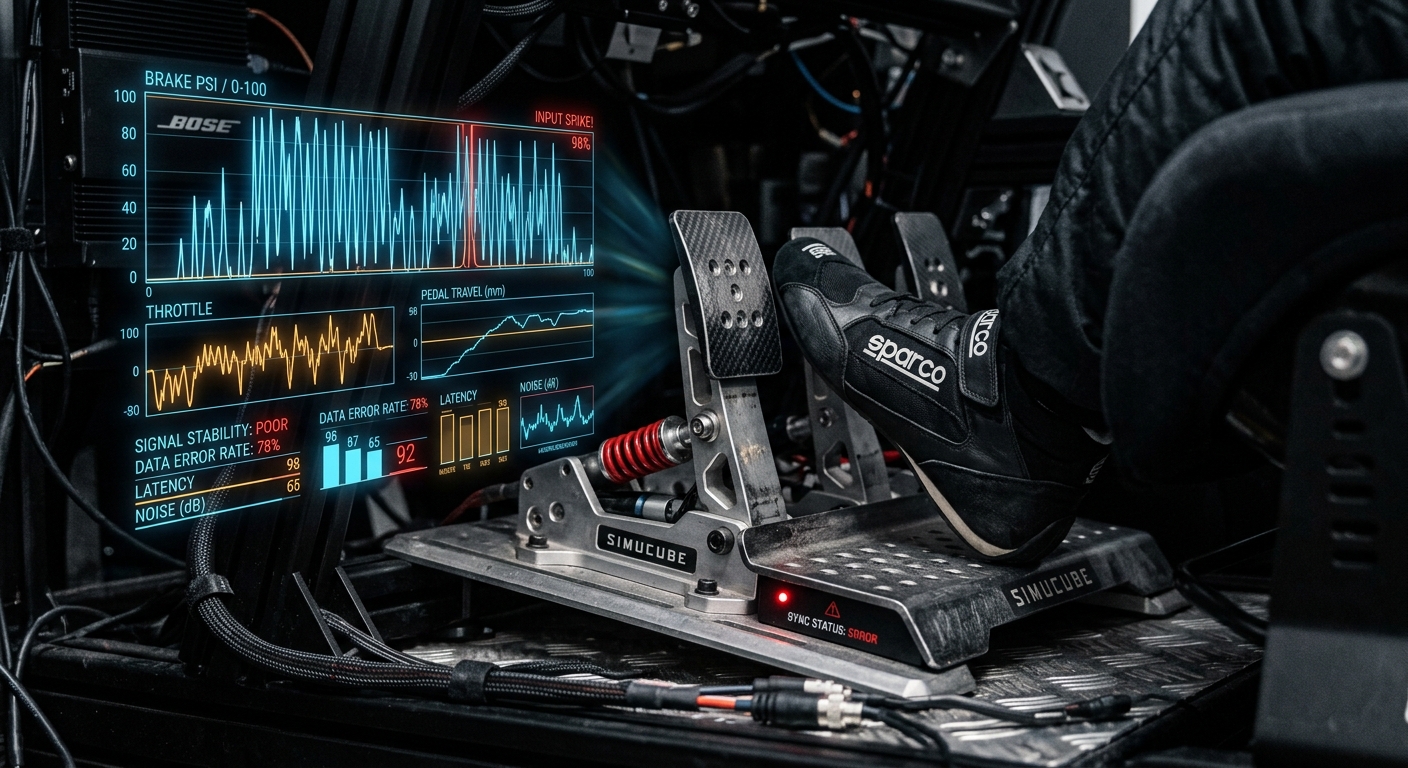
Drivers should provide video evidence with an input overlay or telemetry logs that show a sudden and total loss of signal during the incident.
Should leagues ban DIY 3D-printed parts?
Banning is usually unnecessary. Instead, leagues should implement rules holding drivers fully liable for any incidents caused by custom hardware failures.
Does a technical DNF affect my safety rating?
In most automated systems, a collision is a collision regardless of cause. Manual league reviews may offer leniency, but the impact on other drivers is still factored in.
How do stewards track recurring hardware issues?
Platforms like FairGrid allow stewards to log incident causes, making it easy to see if a driver has a suspicious pattern of hardware-related claims.
Mechanical DNF or Driver Error? A Steward’s Guide to Hardware Failures and Race Integrity
hardware-failure-sim-racing-stewarding-guide
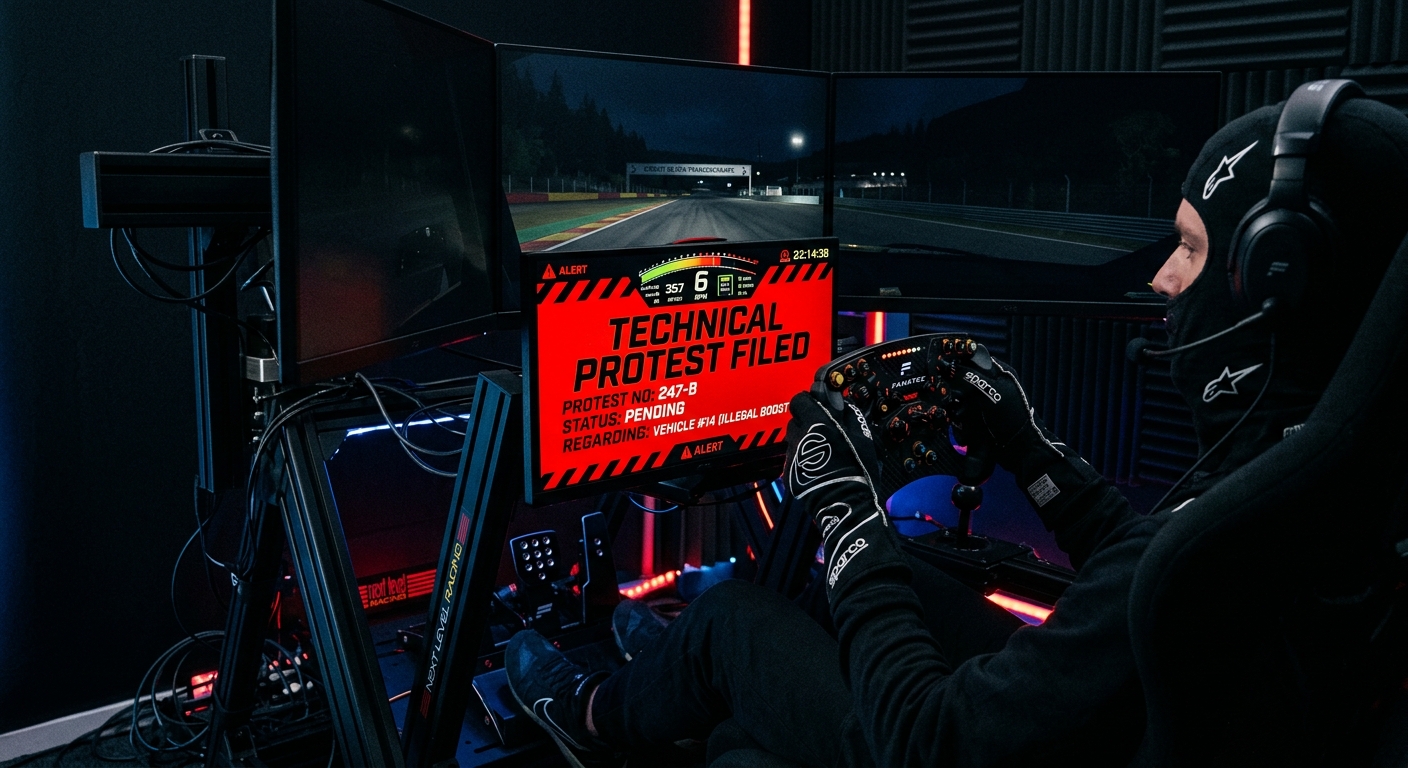
Learn how sim racing stewards differentiate between hardware failures and driver error. Establish fair rules for DIY mods and equipment-related racing incidents to protect integrity.
The Burden of Proof: Differentiating Hardware Failure from Driver Error
When a driver claims a hardware failure caused a collision, the steward's first challenge is verification. Without telemetry or video evidence, a claim like my pedals flickered is indistinguishable from a simple late-braking error. Stewards should look for specific indicators in telemetry data, such as erratic input spikes or a total loss of signal that does not align with typical driving patterns. If the hardware failure is intermittent, the burden of proof rests on the driver to provide logs or replays showing the malfunction. In high-stakes leagues, hardware-induced incidents are often treated as racing incidents only if the failure was sudden, catastrophic, and completely unpredictable. Otherwise, the driver is expected to maintain their equipment to a standard that ensures the safety of others on the track.
DIY Mods and Competitive Integrity: Who is Liable?
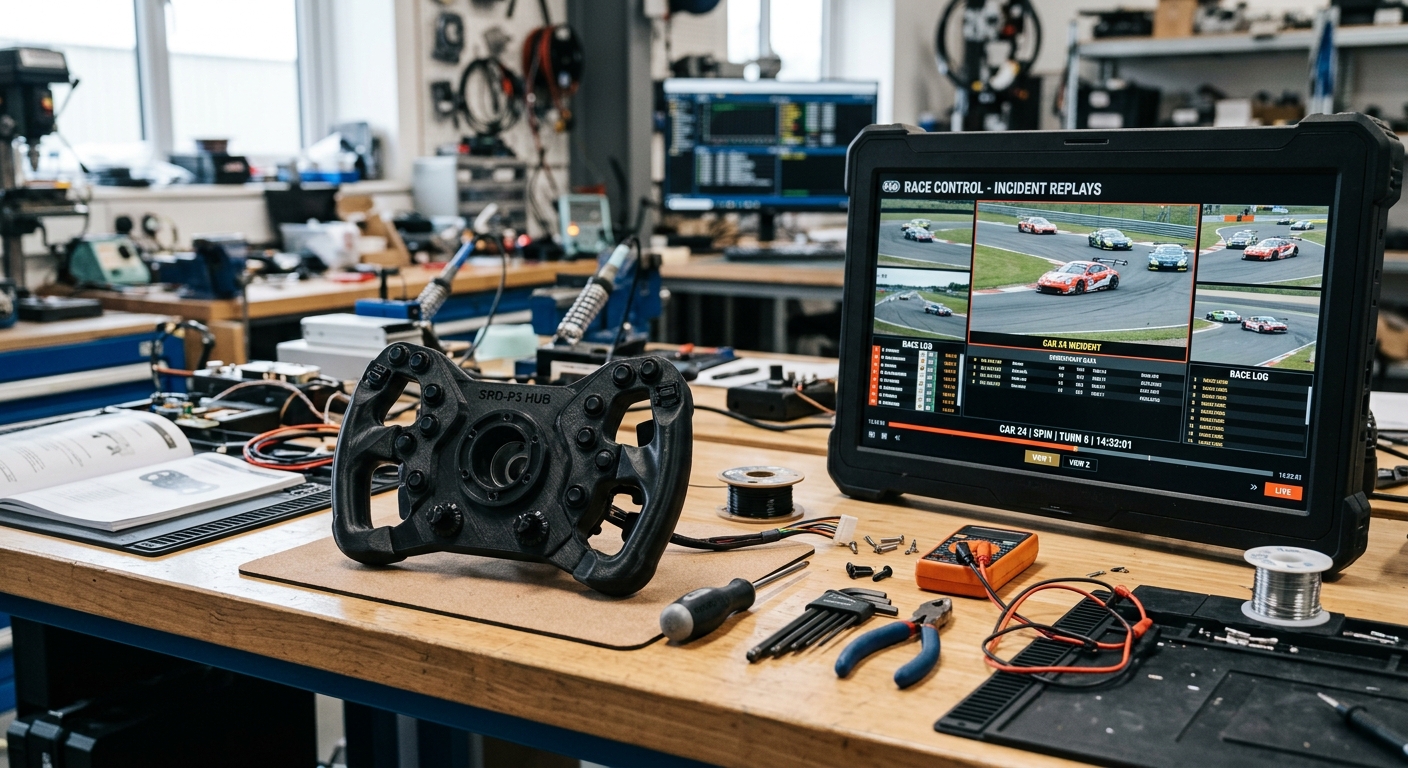
The rise of 3D-printed wheel plates, custom pedal springs, and third-party shifter mods has introduced a new variable into league safety. While DIY culture is a cornerstone of the hobby, it introduces technical risks that off-the-shelf products might avoid. From a stewarding perspective, a driver choosing to race with experimental or unverified hardware assumes the risk of failure. If a 3D-printed component snaps during a race, leading to a pile-up, the steward must decide if this constitutes a failure to maintain equipment. Many elite leagues are now adopting rules that classify DIY-related failures as driver negligence. The logic is simple: competitive integrity relies on predictable car behavior, and drivers who use unreliable hardware compromise the safety of the entire grid.
Standardizing Rules for Technical DNFs and Safety Ratings
To ensure fairness, leagues should codify how technical malfunctions impact safety ratings and championship points. A recurring technical nightmare for one driver should not be allowed to repeatedly ruin the races of others. Standardizing rules might include a three-strike policy for hardware-related incidents or requiring drivers to prove they have addressed a technical issue before being allowed to rejoin the next round. Furthermore, stewards must decide if a technical DNF should result in a lower safety rating impact compared to an intentional collision. By using advanced management tools, organizers can track a driver's history of hardware claims. If a driver consistently blames equipment for mid-pack collisions, it allows stewards to identify patterns of behavior that may actually be driver error masked as technical failure.

Master Your League Operations with FairGrid
Tired of the 'my hardware failed' excuse? Use FairGrid’s comprehensive stewarding tools to track incident history, manage protests, and identify patterns that threaten your league's competitive integrity. Ensure your races are decided by skill, not technical malfunctions.