FAQ
Is 'I didn't see him' a valid defense in a protest?
Generally no. Drivers are responsible for their own awareness and for ensuring their equipment allows them to race safely side-by-side.
Does a single monitor setup excuse a blind spot incident?
No. Drivers on single monitors are expected to use tools like radar, spotters, or virtual mirrors to compensate for limited physical visibility.
How does FOV affect stewarding decisions?
While stewards judge the result on track, an incorrect FOV is often identified as the root cause of repeated spatial awareness penalties.
What is the 'Racing Room' rule?
The rule requires leaving at least one car's width of space when an opponent has established a significant overlap before the corner.
Can FairGrid help track these specific incident patterns?
Yes, FairGrid tracks incident types and penalty points to help league managers identify drivers who consistently struggle with spatial awareness.
The 'Invisible Car' Syndrome: Why Your Rig Setup Isn't a Valid Protest Defense
invisible-car-syndrome-sim-racing-stewarding
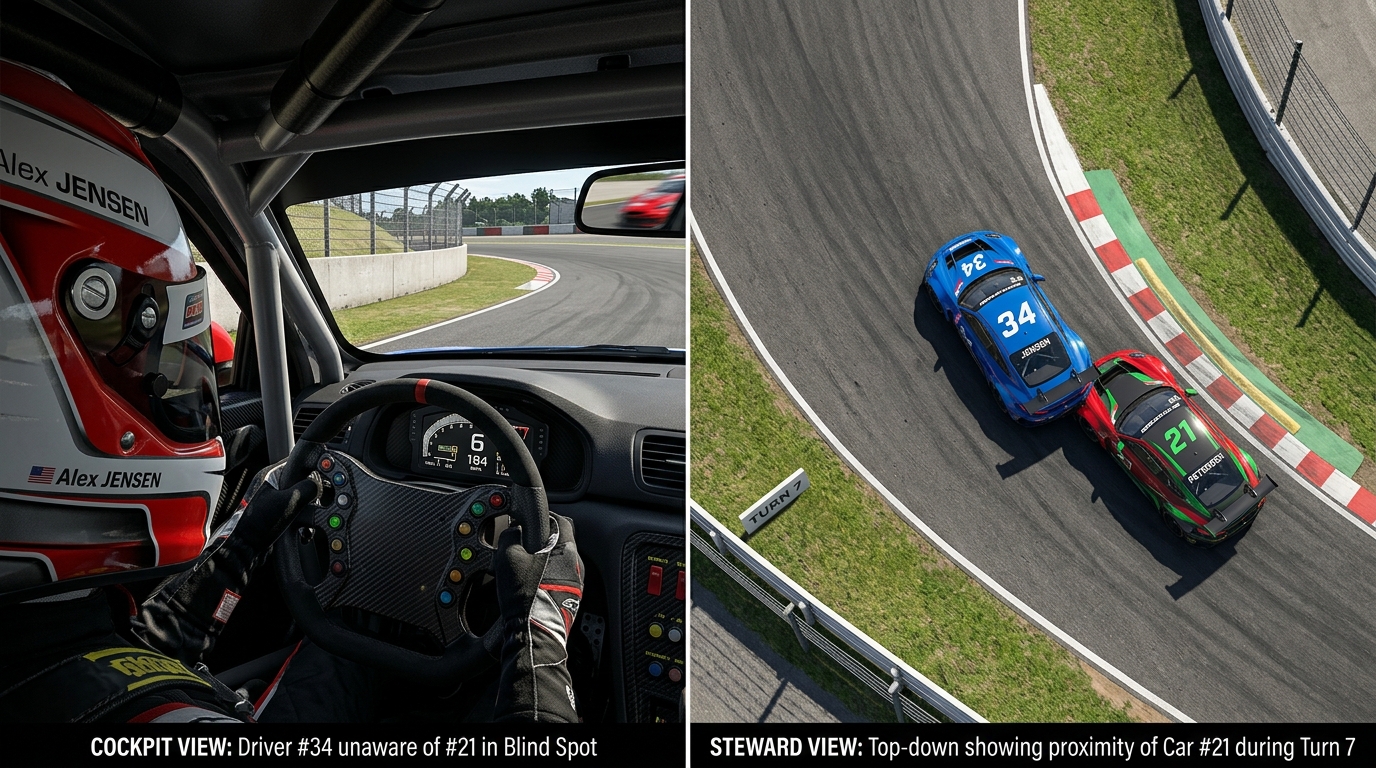
Drivers often blame blind spots for incidents, but stewards view FOV and hardware choices as a matter of personal responsibility and competitive integrity in league racing.
The Stewarding Perspective: Is Lack of Visibility a Mitigating Factor?
Stewards define racing room as the space a driver is entitled to when they have established a significant overlap. From a professional stewarding perspective, visibility is a driver’s personal responsibility. If a driver cannot see a car that has legally earned its space, any resulting contact is typically classified as avoidable contact or negligence. A lack of visibility is not considered an excuse; rather, it is viewed as a failure of preparation and awareness. Stewards expect drivers to use all available tools to maintain a 360-degree mental map of the cars around them.
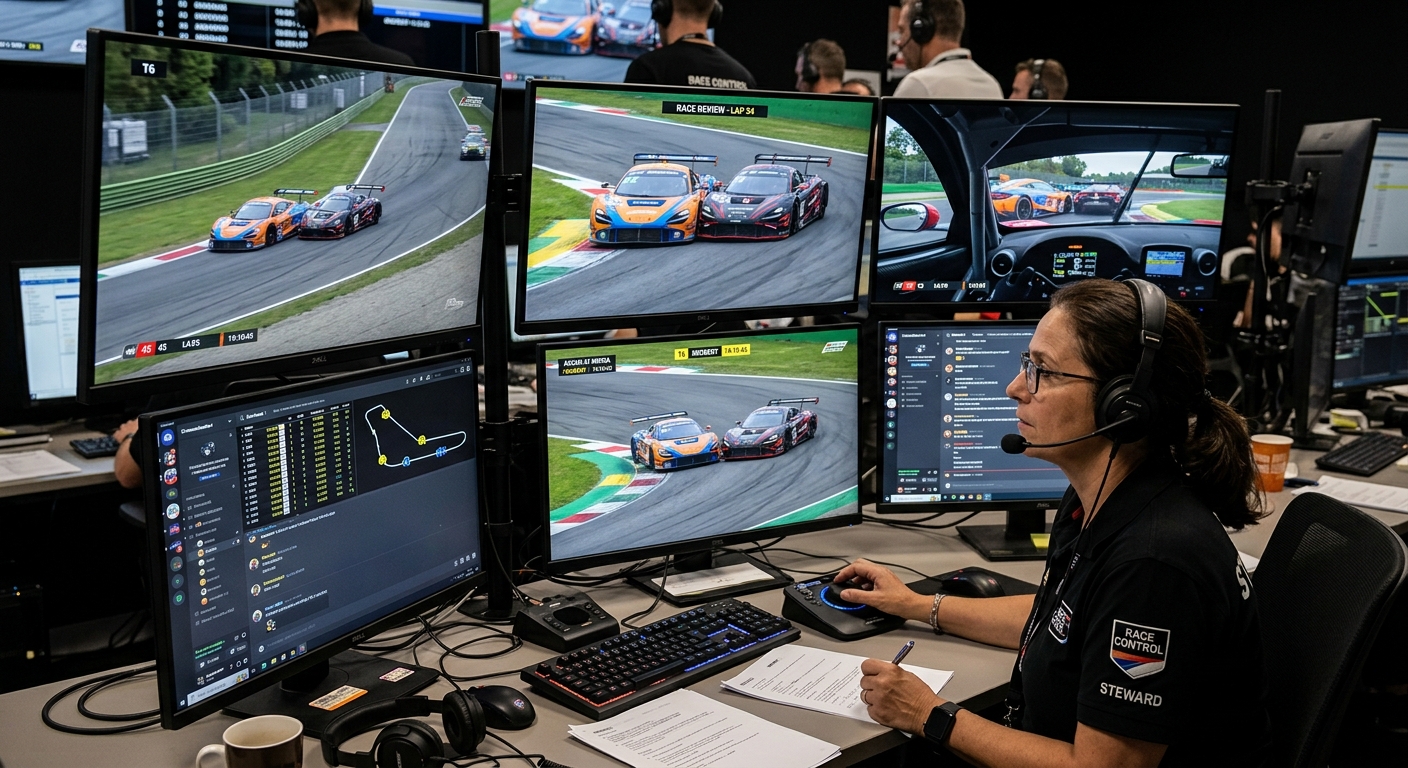
Why FOV and Monitor Distance are Competitive Integrity Issues
Field of View and monitor distance are more than just personal preferences; they are core issues of competitive integrity. A rig setup that severely restricts side-to-side visibility makes a driver a liability during close-quarters racing. When drivers prioritize immersion or extreme zoom over situational awareness, they compromise the safety of everyone on the grid. Competitive integrity requires that every driver has the necessary tools, whether hardware-based or software overlays, to respect the space of their competitors regardless of their physical monitor count.
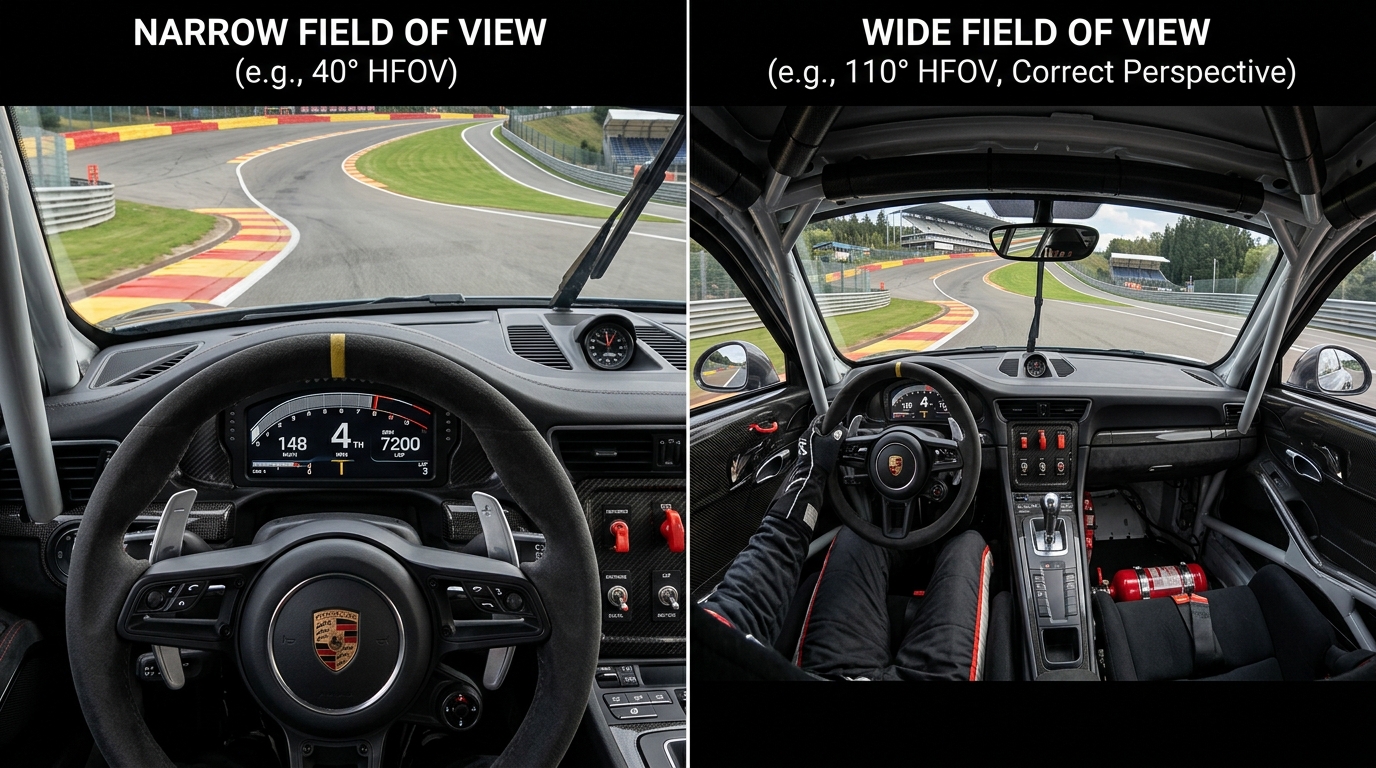
Analyzing the Blind Spot Incident: When It Is Racing Room vs. Negligence
Analyzing a blind spot incident involves more than just looking at the point of impact. Stewards examine telemetry and spotter data to see if the driver was warned of an overlap. If a spotter called 'car left,' the 'I didn't see him' defense is immediately invalidated. Stewards look for signs of negligence, such as a driver turning into an apex as if no other car exists despite a clear overlap. The distinction between a racing incident and negligence often comes down to whether the driver took reasonable action to verify the space was clear before moving.
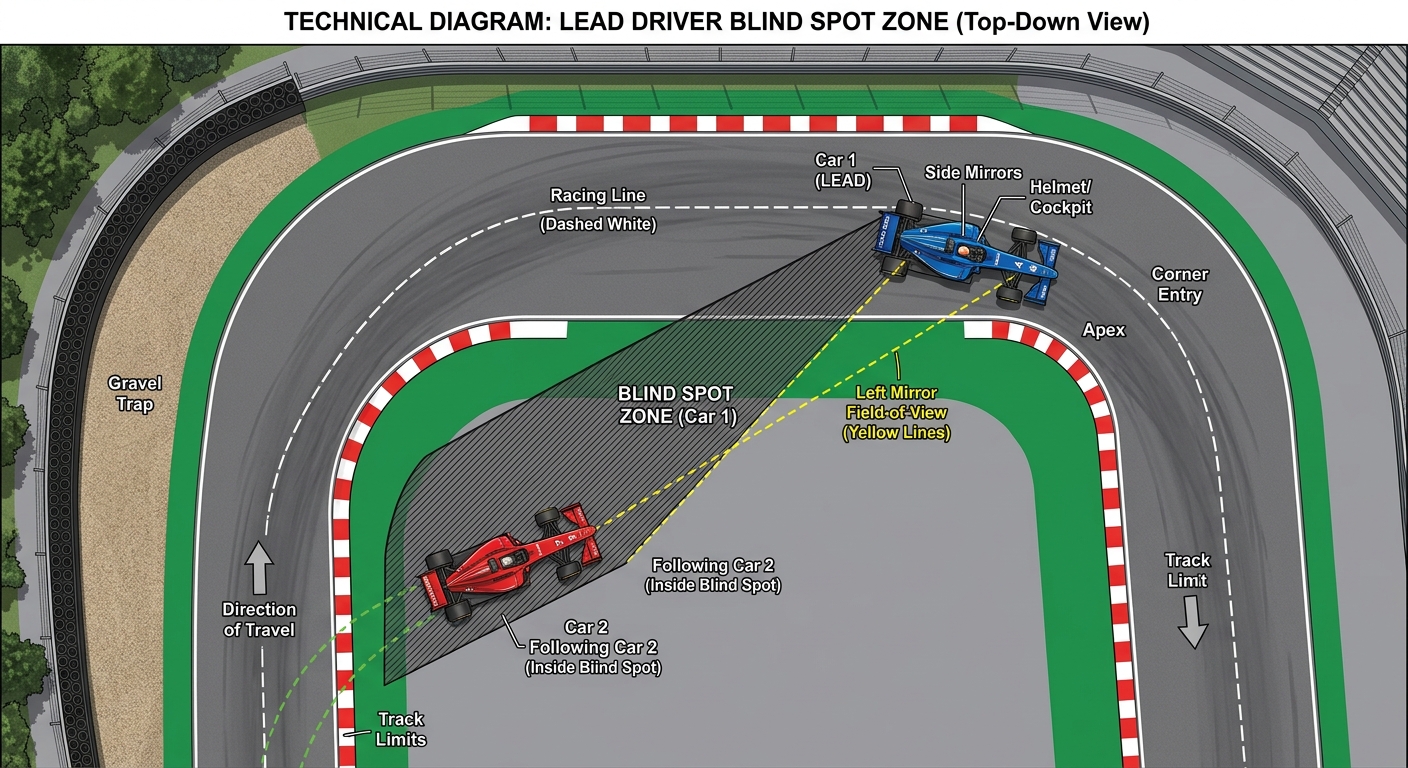
Enhance Your League's Competitive Integrity
Use FairGrid to track incident patterns and identify drivers who consistently struggle with spatial awareness. Our platform helps you turn every protest into a tool for driver education.