FAQ
Why did my Safety Rating drop when someone else hit me?
Automated systems like ACC's SA use proximity-based math. Since the AI cannot determine intent or fault, any contact results in a loss of points for both drivers to discourage aggressive proximity.
What are 'dirty but legal' moves?
These are maneuvers like moving late in a braking zone or squeezing a driver wide. They don't trigger the game's automatic penalty system but are considered unsportsmanlike in professional racing.
How is human stewarding better than AI?
Humans can analyze the context, driver intent, and specific positioning. This allows for nuanced decisions that protect clean drivers and accurately penalize those who break racing etiquette.
Is league racing better for beginner drivers?
Yes. Beginner-friendly leagues provide a structured environment with clear rules and accountability, helping new drivers learn proper race craft much faster than in unmonitored public servers.
How does FairGrid help with race control?
FairGrid provides a centralized platform for managing protests and penalties. It streamlines the workflow for stewards, making it easier to maintain competitive integrity across entire championships.
The Safety Rating Trap: Why Your SA is Dropping and How Leagues Restore Fair Play
the-safety-rating-trap-sa-stewarding
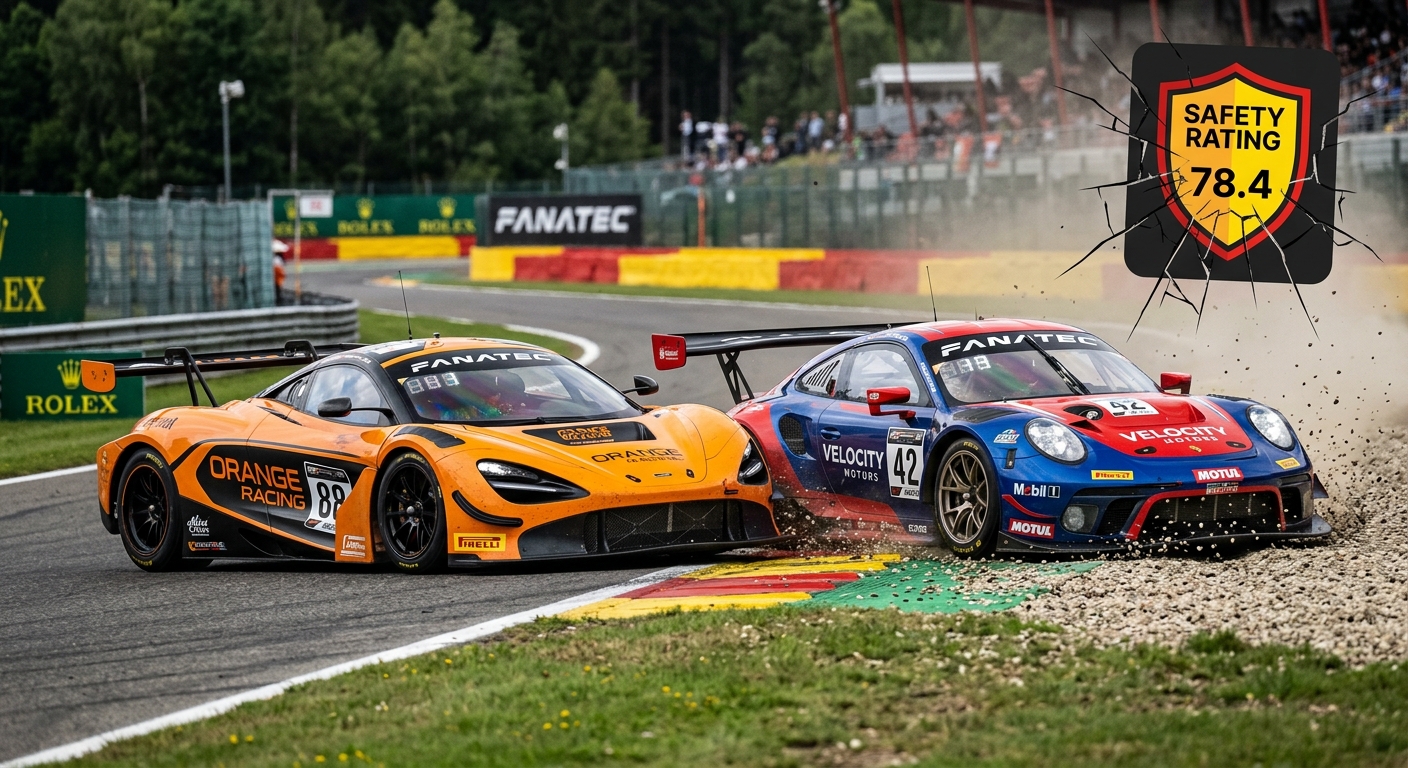
Explore the limitations of automated safety ratings in sim racing and discover how human-led league stewarding restores competitive integrity and fair play for drivers.
The Myth of the Clean Public Lobby and SA Calculation Flaws
The primary flaw of automated safety ratings lies in their mathematical nature. Systems like ACC's SA calculate points based on proximity and contact. If you are near another car, you gain trust; if you touch, both parties lose points. The system does not understand who missed a braking point or who turned in blindly. This leads to collateral damage where the victim of a crash is penalized just as heavily as the perpetrator. For competitive drivers, this creates a 'safety rating trap' where their progress is dictated by the mistakes of others rather than their own skill. High SA ratings in public lobbies often just mean a driver has spent a lot of time driving solo or very cautiously, not necessarily that the racing is high-quality.

The 'Dirty Legal' Move: Where Automated Stewarding Fails
Beyond simple crashes, automated systems struggle with the ethical 'grey area' of sim racing. This includes 'dirty legal' moves—driving tactics that are technically allowed by the game's code but violate the spirit of competitive integrity. Moving under braking, squeezing an opponent off the track without making contact, or 'brake checking' are maneuvers that an AI steward won't recognize as infractions. These moves exploit the limitations of the game's penalty logic to gain an unfair advantage. Without a human steward to review the intent and the context of the move, these drivers go unpunished, further frustrating those who want to race with professional etiquette.

Active Stewarding: The Competitive Advantage of League Racing
To escape the chaos of public lobbies and the limitations of automated ratings, many drivers transition to structured leagues or platforms like LFM. The defining advantage of league racing is active human stewarding. Human race control can distinguish between a racing incident and a deliberate dive-bomb. Platforms like FairGrid empower these organizers by providing a robust framework for incident reviews and protest management. By using FairGrid, leagues can automate the tedious parts of operation while keeping human judgment at the center of the decision-making process. This ensures that penalties are fair, perpetrators are held accountable, and the victim's competitive integrity is protected.
Take Control of Your Racing Integrity
Don't let automated ratings define your racing career. Whether you are a frustrated driver or a league organizer, FairGrid provides the tools you need for professional-grade race control and fair play. Visit FairGrid today to see how we empower human stewarding and protect competitive integrity.