FAQ
What is a stint limit in endurance sim racing?
A stint limit is a regulatory cap on the maximum amount of time a single driver can continuously operate the car before a mandatory swap.
How do stewards verify physical driver swaps?
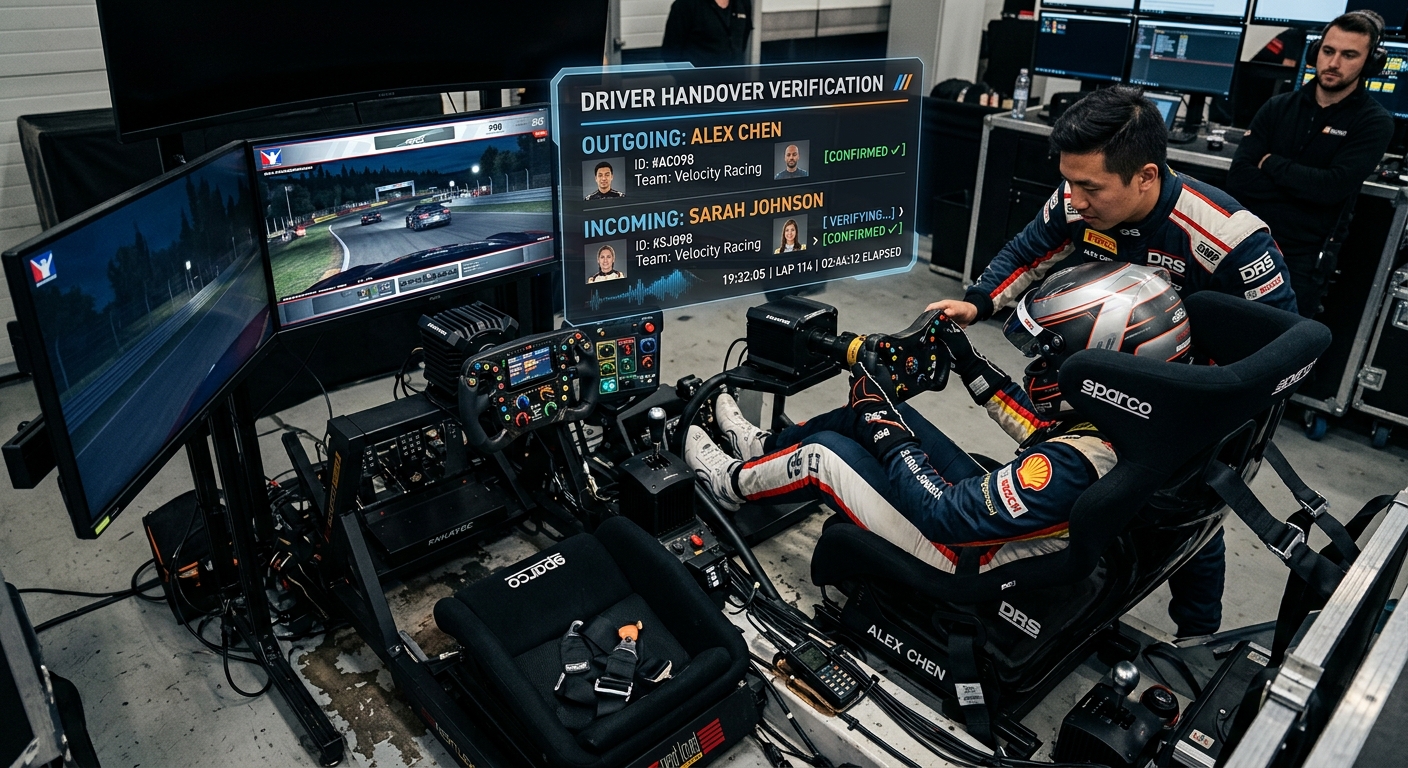
Stewards often use mandatory webcam feeds, driver check-ins via voice chat, or specific pit-stop delays to verify the identity of the driver.
What are the penalties for exceeding maximum drive time?
Penalties range from post-race time additions to total disqualification, depending on the specific ruleset of the league and the severity of the breach.
Can technology automate the tracking of driver swaps?
Yes, advanced stewarding platforms can integrate with simulator APIs to automatically track which driver is active and calculate their total drive time.
What evidence is needed to protest an illegal swap?
Protests typically require telemetry logs, pit lane entry/exit timestamps, and official broadcast or stream VODs to prove a violation occurred.
The Steward’s Guide to Endurance Racing: Managing Driver Swaps and Stint Integrity
stewards-guide-endurance-racing-driver-swaps
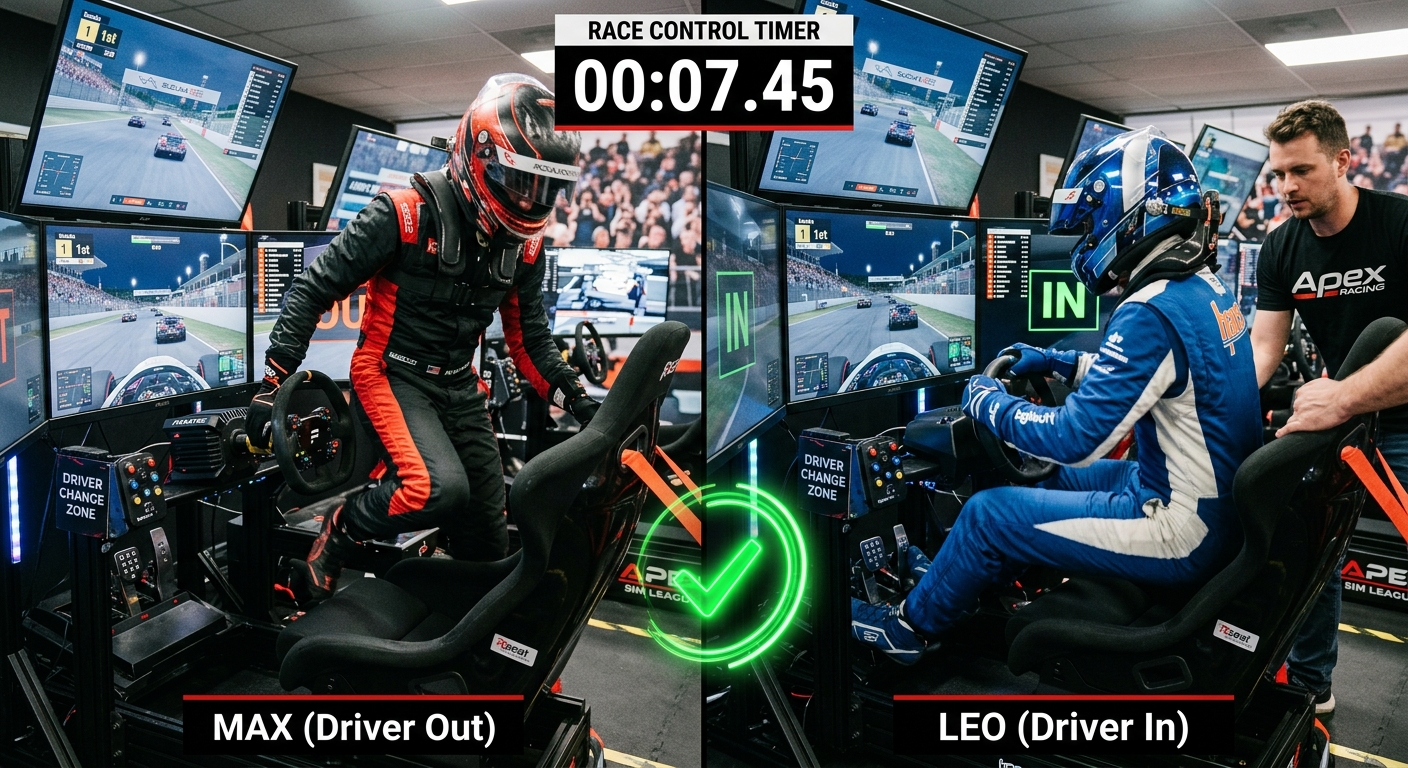
Master the logistics of driver swaps and stint integrity in endurance sim racing. Learn how stewards prevent ringer exploits and maintain competitive fairness in long-format events.
Beyond the Pit Box: The Evolution of Sim Racing Swaps
Driver swaps have evolved from simple in-game button presses to complex logistical operations. In modern professional leagues, transitions now include remote handovers across various time zones and increasingly popular physical swaps in LAN-style environments. Each method brings unique challenges for race control. Stewards must ensure that the transition is seamless and that the game telemetry accurately reflects which driver is currently behind the wheel. This creates a clear chain of custody for the entry, ensuring that the driver registered for the stint is the one actually generating the telemetry data. Without careful oversight, the transition window becomes a primary area for technical errors or intentional rule manipulation.

Stint Timing and Minimum Drive Time: What Stewards Look For
Competitive integrity in endurance racing relies heavily on the strict enforcement of stint limits and minimum drive times. Stewards monitor these metrics to ensure no single driver gains an unfair advantage by exceeding maximum continuous driving limits or failing to meet their required share of the race. Infractions often lead to significant post-race penalties that can completely reshape the final podium. Monitoring tools are essential to track these drive times in real-time, allowing race control to flag potential violations before they compromise the race results. Consistent enforcement prevents driver burnout and ensures that the event remains a true team competition rather than a solo performance by a single elite driver.
The Physical Swap Dilemma: Maintaining Entry Integrity
Physical driver swaps present a unique challenge: verifying the identity of the person physically sitting in the rig. Unlike remote swaps where unique simulator accounts are used, physical changes often occur on a single machine and account. Stewards must implement specific verification protocols to prevent 'ringer' exploits, where a faster driver might complete more than their allotted share of the race under a teammate's name. Maintaining registration integrity ensures that the competition remains a genuine team effort as intended by the league regulations. Organizers often require camera feeds or specific pit-stop procedures to validate that the person behind the wheel matches the registered entry for that specific stint.

Streamline Your Endurance League with FairGrid
Managing complex multi-driver events is significantly easier with the right infrastructure. FairGrid provides league management tools that help organizers track driver stints and automate results for even the most complex endurance races. Ensure your next event is fair, transparent, and professionally managed.