FAQ
What is Force Majeure in sim racing?
It refers to unpredictable events outside a driver's control, such as a server crash or total hardware failure, that may exempt them from standard penalties depending on the league rulebook.
Can I be penalized if my pedals disconnect mid-race?
Yes. If the disconnection causes a collision, stewards often issue a penalty to uphold safety standards, as the impact on other competitors is the primary concern for race control.
How do I prove my wheel failed during a protest?
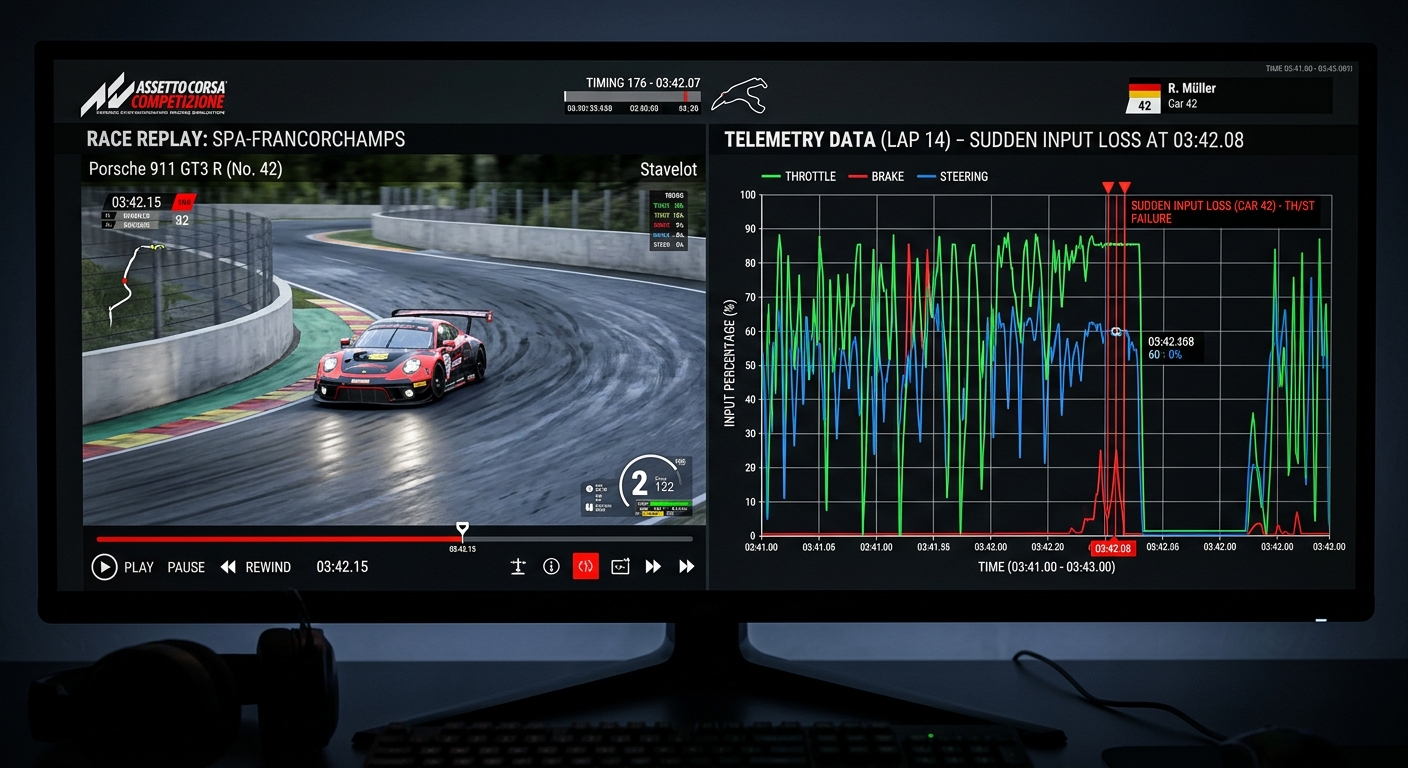
The most effective evidence is a video replay featuring an input overlay combined with exported telemetry data that shows a sudden loss or freeze of input signals.
Do technical DNFs affect my safety rating?
In most automated systems, a DNF or contact caused by hardware failure will still negatively impact your rating, as these systems typically track outcomes rather than intent.
Should leagues have a grace period for hardware issues?
While some casual leagues offer warnings, strict competitive environments usually require consistent application of rules to ensure all drivers prioritize equipment reliability.
When the Gear Fails: A Steward’s Guide to Hardware Malfunctions and Race Integrity
hardware-malfunctions-stewarding-guide
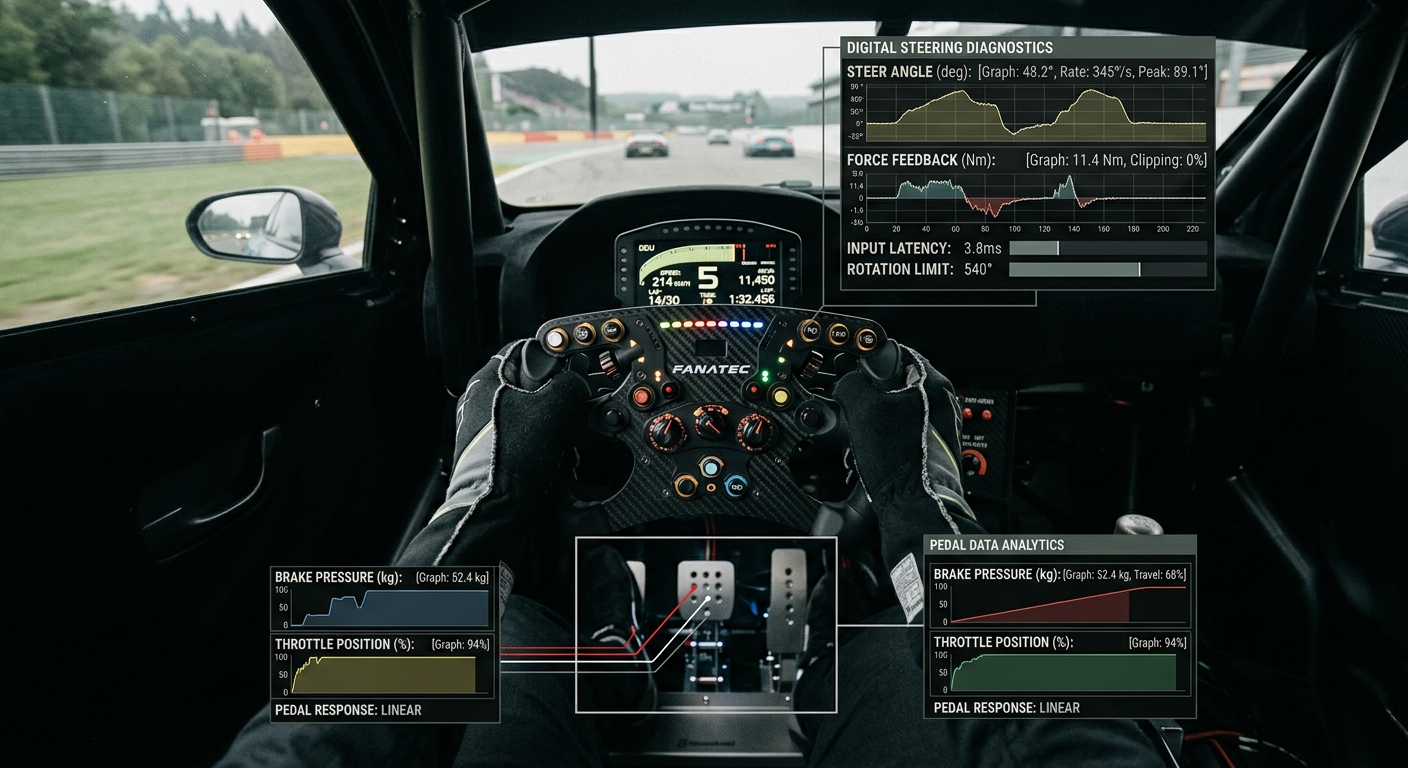
Hardware failures in sim racing often lead to multi-car accidents. Discover how stewards use telemetry and rulebooks to balance technical DNFs with competitive integrity.
The Conflict: Hardware Reliability vs. Competitive Integrity
Competitive integrity relies on the predictability of every car on the grid. When a hardware malfunction occurs, that predictability vanishes instantly. Stewards must navigate the fine line between empathy for a driver’s technical misfortune and the necessity of protecting the field. While a driver is not at fault for a sudden cable disconnect, the resulting havoc on track constitutes a breach of safety standards. Race control must prioritize the safety of the entire grid, meaning that technical DNFs are often treated with the same scrutiny as manual driving errors to ensure that participants invest in reliable equipment and maintenance.
Is it a Penalty? Adjudicating Crashes Caused by Technical Issues
Adjudicating hardware-related incidents requires a clear regulatory framework. Most professional leagues categorize hardware failure as a racing incident only if the driver takes immediate action to mitigate danger. If a wheel fails and the driver remains pinned to the throttle, a penalty is almost certain. However, if telemetry shows a sudden loss of input followed by an attempt to brake using alternative methods, stewards may apply a Force Majeure clause. The steward's dilemma lies in determining if the driver’s reaction to the failure was sufficient to prevent further escalation of the incident.
The Burden of Proof: Telemetry and Input Overlays in Protests
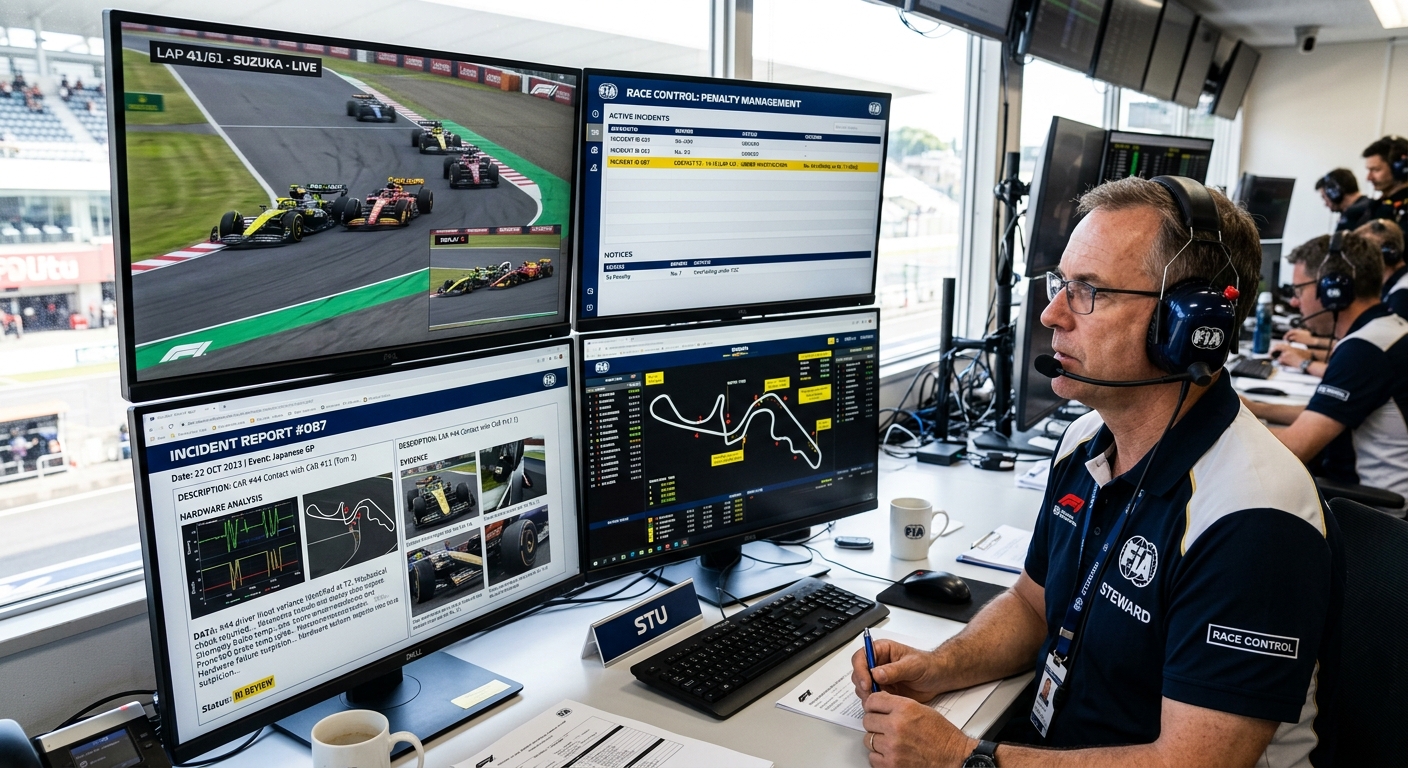
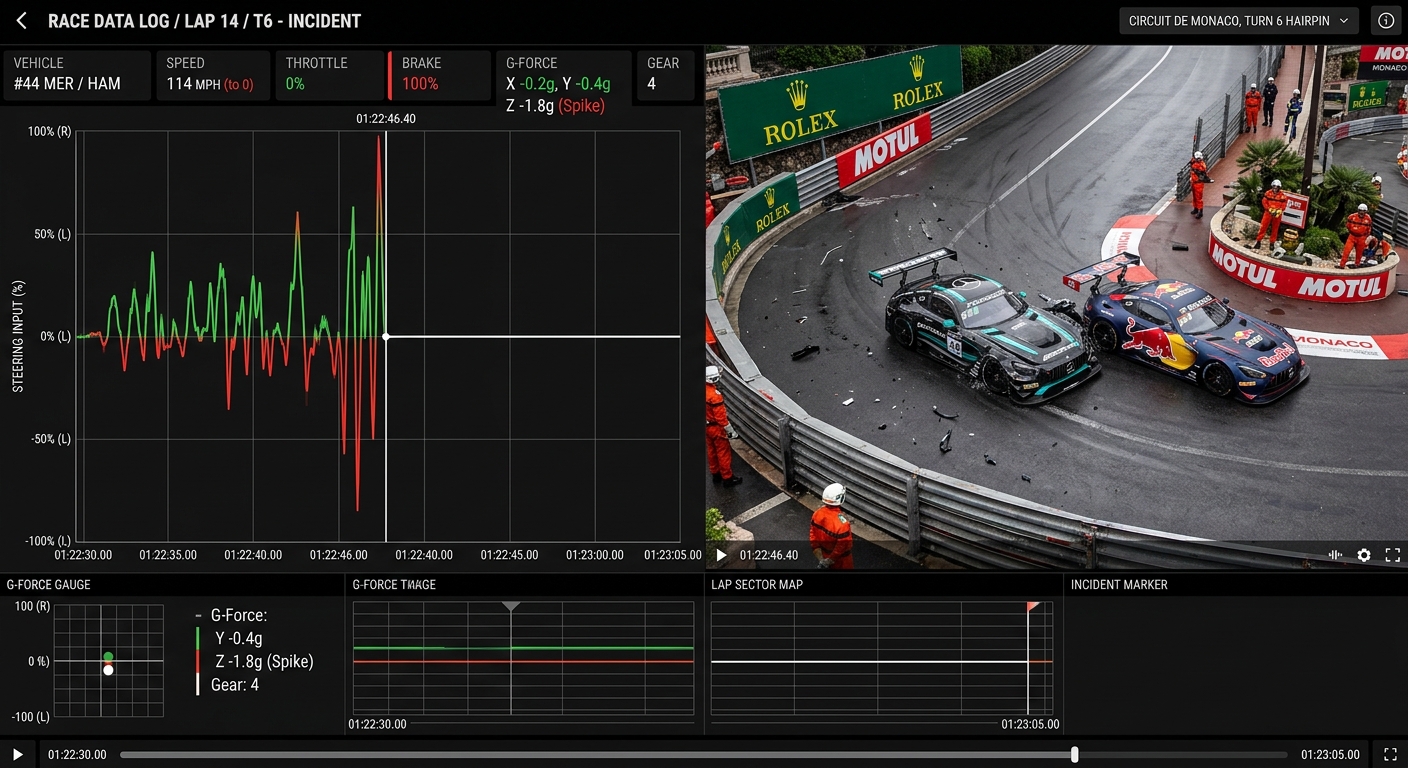
The responsibility to prove a hardware failure lies entirely with the driver filing the protest. Telemetry and input overlays are the only objective ways to verify these claims. In a review, stewards look for unnatural data spikes, such as brake pressure dropping to zero instantly while a driver is mid-corner. Without this data, race control must treat the incident as standard driver error. Advanced platforms like FairGrid streamline this process by allowing stewards to cross-reference incident timestamps with synchronized telemetry, ensuring that technical excuses are verified by data rather than hearsay.
Standardize Your League’s Stewarding
Bring professional-grade integrity to your sim racing community. Use FairGrid to manage protests, review telemetry evidence, and adjudicate incidents with precision.