FAQ
What counts as 'Force Majeure' in sim racing?
It includes game crashes, server-side failures, and documented software stutters that remove a driver's control over their vehicle.
How can stewards prove a stutter occurred?
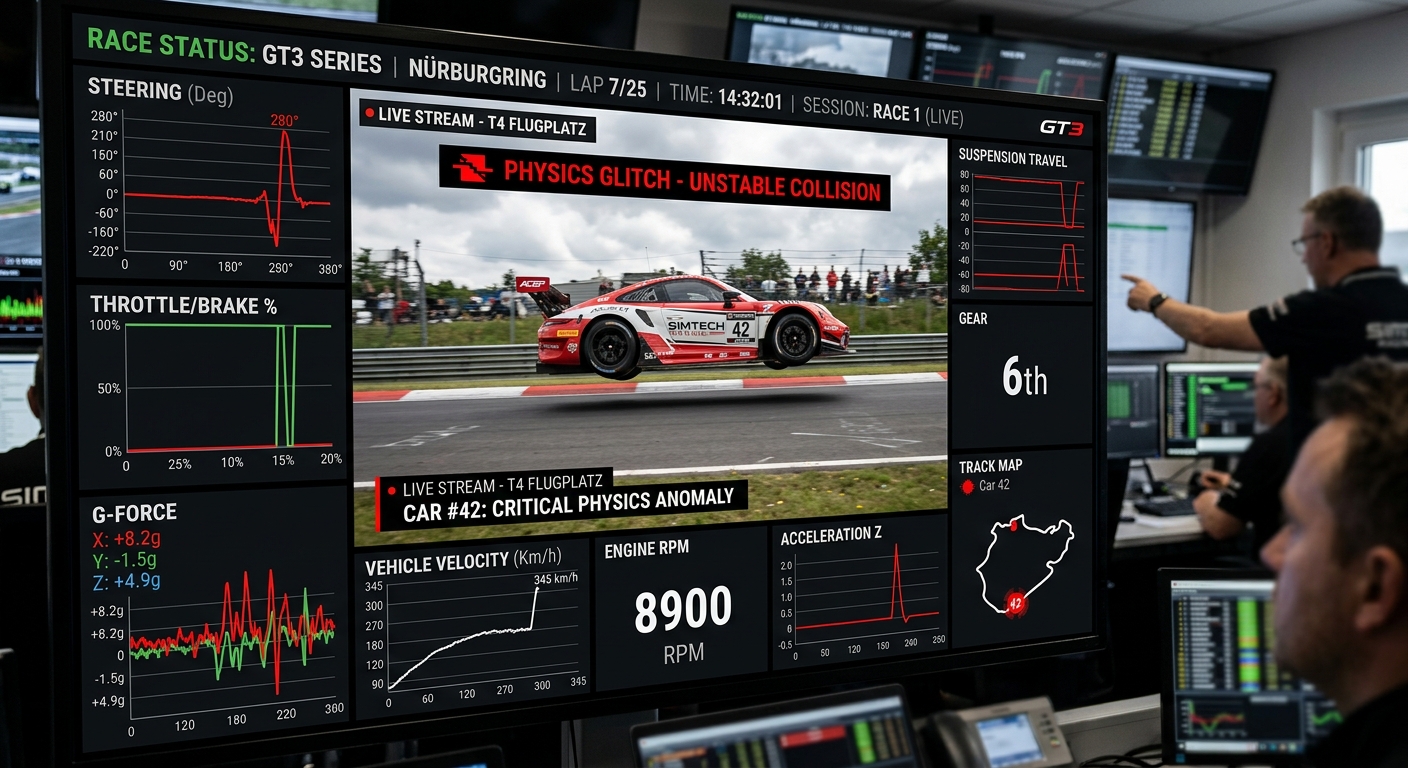
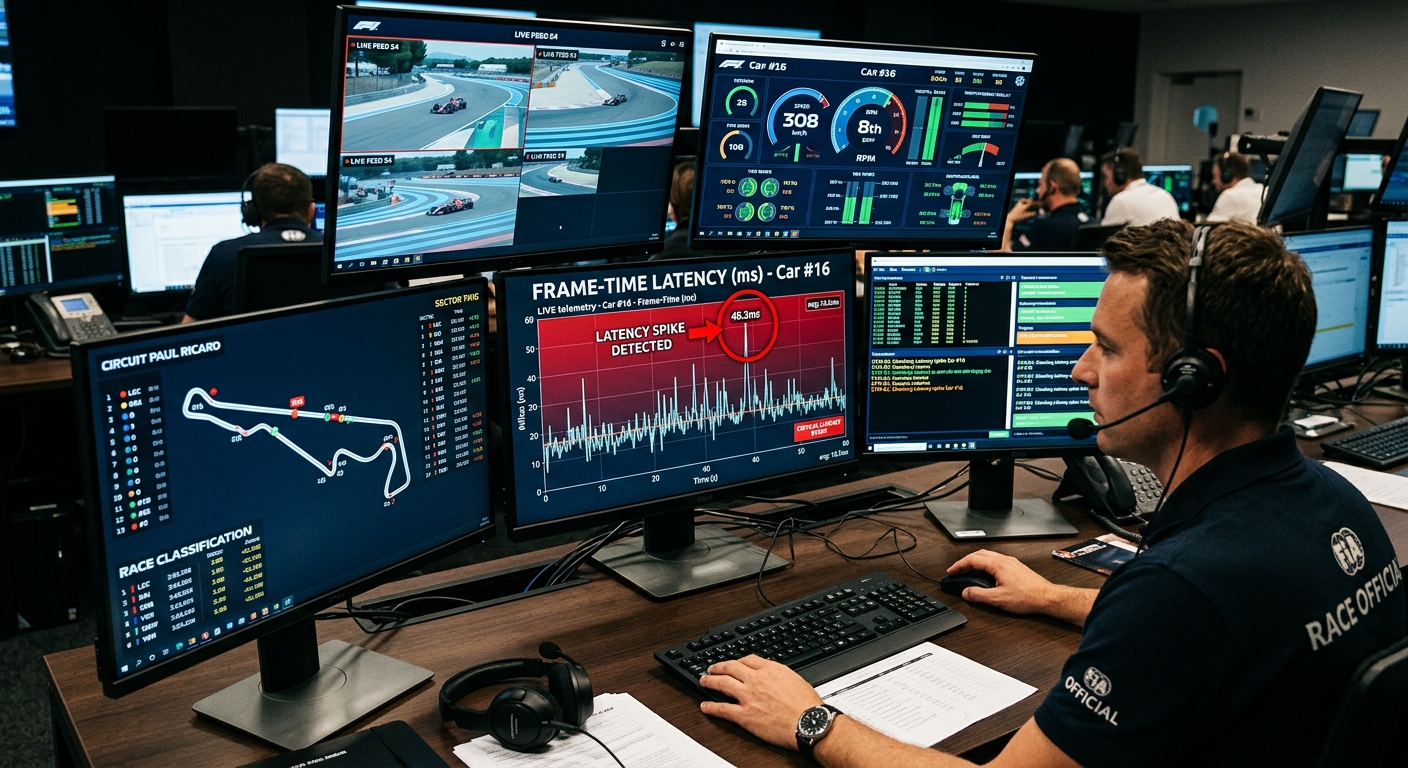
Stewards look for erratic car behavior in replays, such as instant teleportation, and check telemetry for frame-time spikes or input freezes.
Should a driver be penalized for a lag-induced collision?
If the lag is a one-off occurrence, it is usually ruled a racing incident. Persistent lag may require the driver to retire for safety.
Can points be reinstated after a game crash?
Yes, many competitive leagues use SOPs to award partial or compensatory points if a crash is verified as a software failure.
What is the best way to report a technical incident?
Use a platform like FairGrid to submit video evidence from multiple angles along with any available telemetry or system logs.
Beyond Driver Error: How Sim Racing Stewards Should Handle Technical Incidents
beyond-driver-error-sim-racing-technical-incidents
Discover how sim racing stewards handle technical incidents like stutters and netcode. Learn to define force majeure and maintain competitive integrity in your league.
Defining the Force Majeure of Sim Racing: Stutters and Netcode
In traditional motorsport, Force Majeure refers to unforeseeable circumstances like a sudden downpour or a spectator on track. In the digital realm, Force Majeure takes the form of hardware stutters, server-side lag, and netcode. A technical incident occurs when the simulation fails to accurately represent the driver's inputs or the position of other cars due to external software or network factors. Defining these clearly in your league's rulebook is the first step toward maintaining competitive integrity. It allows stewards to categorize an incident as a 'technical failure' rather than 'avoidable contact.'
Case Study: Analyzing the 10-Point Landing at Daytona
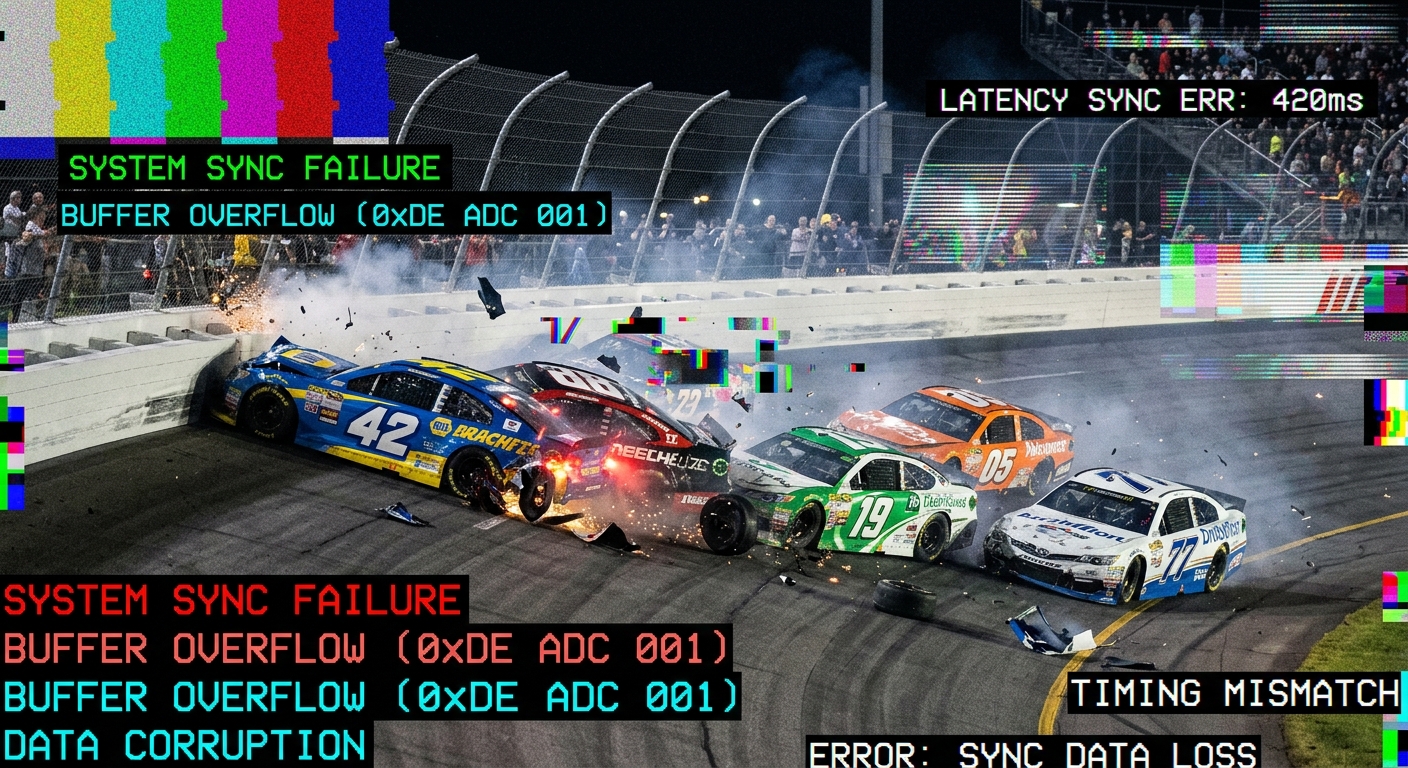
The recent high-profile incident in Le Mans Ultimate at Daytona serves as a perfect example. A car leading a pack experienced a sudden system stutter, causing the physics engine to lose synchronization. The resulting multi-car pileup looked like a massive driver error on the surface, but the telemetry told a different story. In this case, the car did not respond to braking inputs because the simulation had paused. When stewards see a car behaving in ways that defy physics—such as instant acceleration, strange rotations, or 'bouncing' off invisible objects—it is a clear indicator of a technical glitch rather than a lapse in judgment.
The Steward’s Dilemma: Is it a Racing Incident or Technical Failure?
The hardest task for a steward is differentiating a 'lag tap' from an intentional bump. When a car makes contact from a distance of several feet (netcode), the driver may be blameless. Stewards should look for 'warping' or 'rubber-banding' in the replay. If a driver’s car is consistently blinking out of existence, the responsibility lies with them to find clear air. However, a one-off frame-drop that causes a car to miss a braking zone should be treated as a racing incident. FairGrid's platform allows stewards to review these moments with higher precision, ensuring that penalties are only applied when a driver had the agency to avoid the contact.

Modernize Your League's Stewarding with FairGrid
Tired of disputes over technical glitches? FairGrid provides the professional tools your league needs for transparent incident reporting, data-backed reviews, and efficient penalty management. Ensure your competitive integrity today.