FAQ
Do safety ratings like iRacing SR matter in real life?
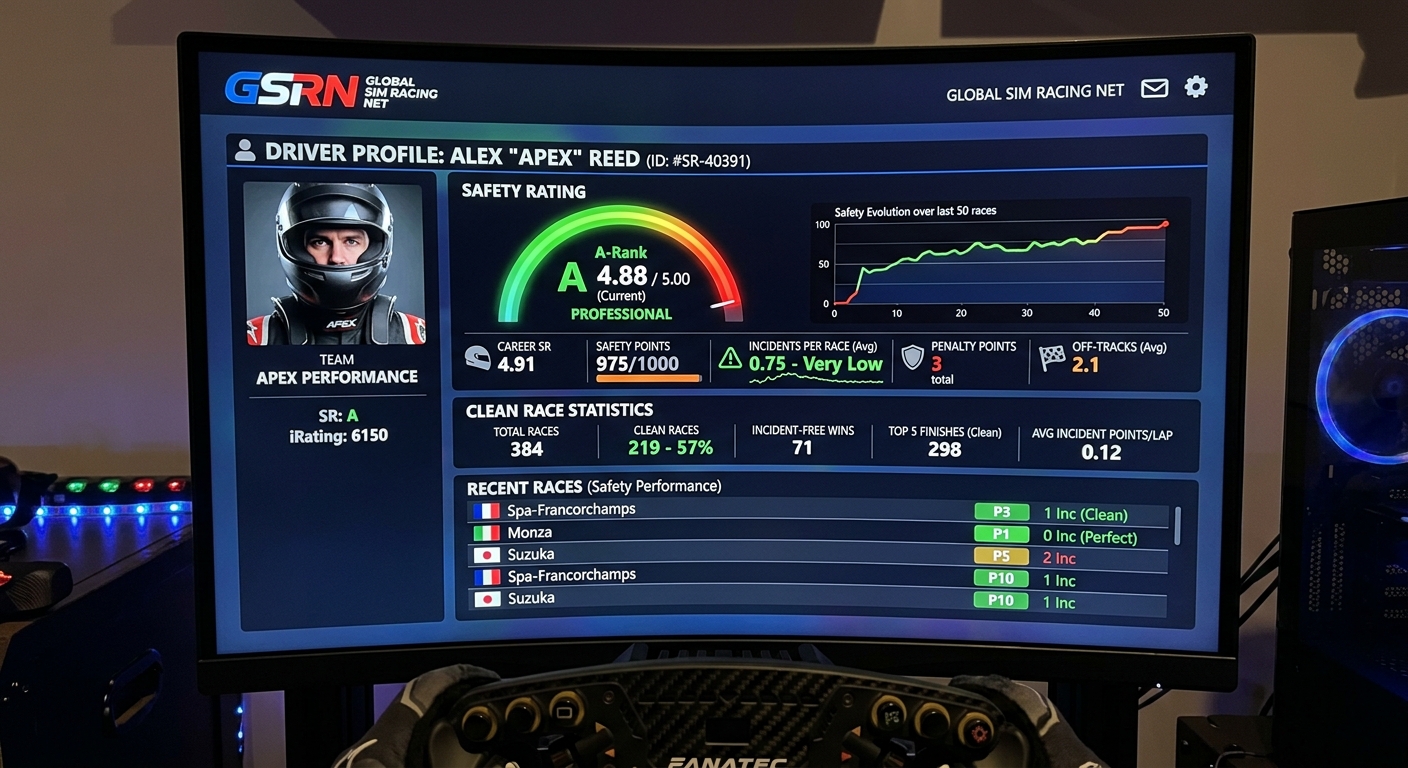
While not legally recognized by track day organizers, these ratings demonstrate a driver's discipline and ability to maintain control under pressure.
How does sim racing help with flag recognition?
Organized sim platforms use identical flag systems to real-world racing, teaching drivers to react instantly to yellow, blue, and red flags.
Is league racing better than public lobbies for learning etiquette?
Yes, because leagues use human stewarding to enforce etiquette that automated systems often miss or misjudge.
Can sim racing prevent accidents on a real track?
It helps by developing the situational awareness and peripheral safety habits that allow drivers to avoid common on-track incidents.
What is the biggest difference between sim and real track rules?
The fundamental rules are the same, but real-world track days have much higher physical and financial consequences for contact.
Beyond the Lap Time: How Sim Racing Stewarding Prepares You for Real-World Track Days
sim-racing-etiquette-real-world-track-driving
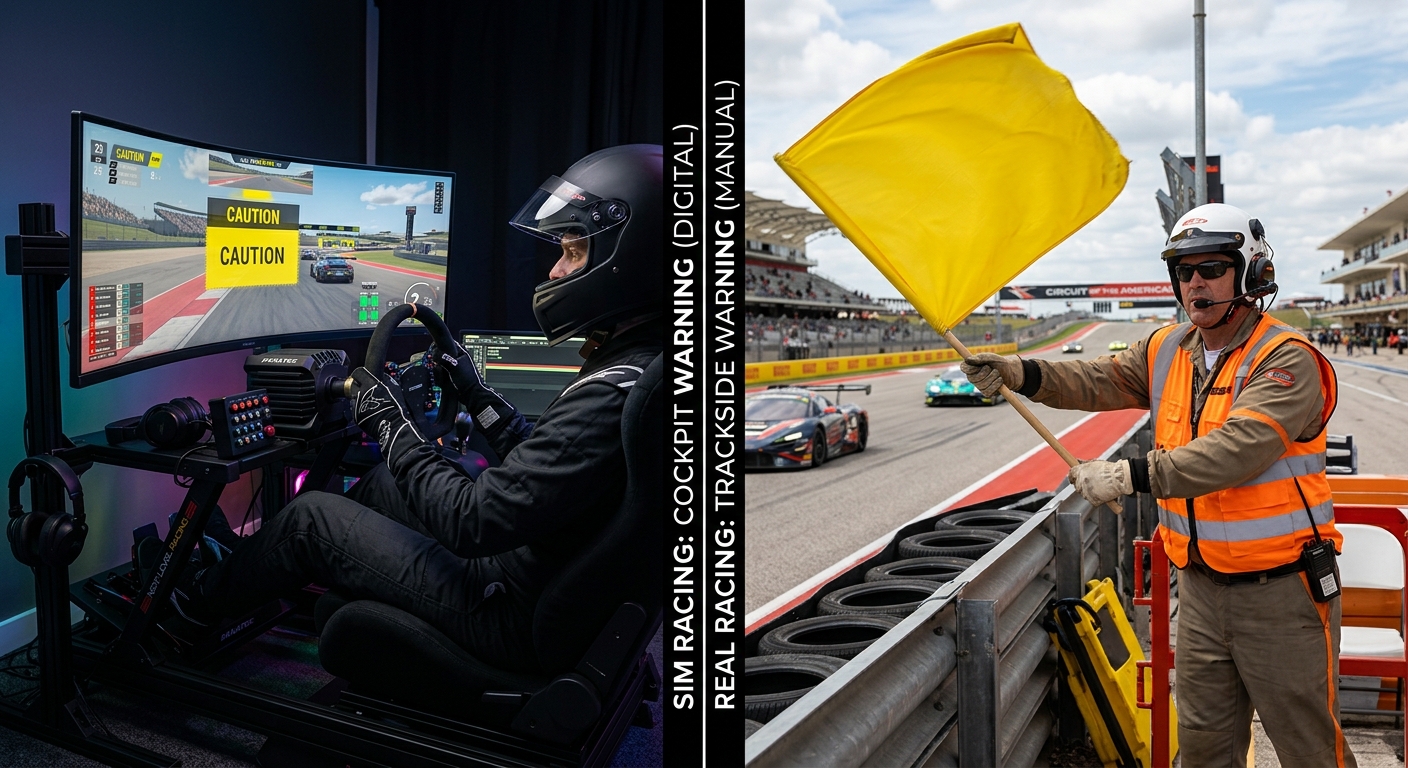
Discover how virtual safety ratings and professional stewarding build the essential etiquette and safety skills needed for a successful transition to real-world track days.
The Virtual Rulebook: Do Sim Safety Ratings Actually Matter?
Virtual safety ratings like iRacing SR or ACC SA are often viewed as digital gatekeeping, but they represent a driver's ability to avoid incident points and respect racing room. In the real world, a racing license is more than a badge of speed; it is proof that you are not a liability to other drivers. Sim ratings force participants to prioritize survival over aggressive overtaking, mirroring the financial and physical stakes of real-world track days where contact is the ultimate failure. By maintaining a high virtual rating, you demonstrate the discipline required to handle a high-performance vehicle in a crowded field.
Race Control 101: Translating Flags and Penalties to the Real Track
Real-world track days rely on a shared language of flags and signals to maintain order. In an organized league environment, ignoring a yellow flag or failing to respect a blue flag carries immediate stewarding consequences. By internalizing these protocols virtually, drivers develop a subconscious response to trackside warnings. This transition from a digital dashboard alert to a physical flag marshal becomes seamless. Understanding that race control is the final authority ensures that instructions are followed without hesitation when the environment changes from pixels to asphalt.

Situational Awareness: Developing a Safety Second Nature
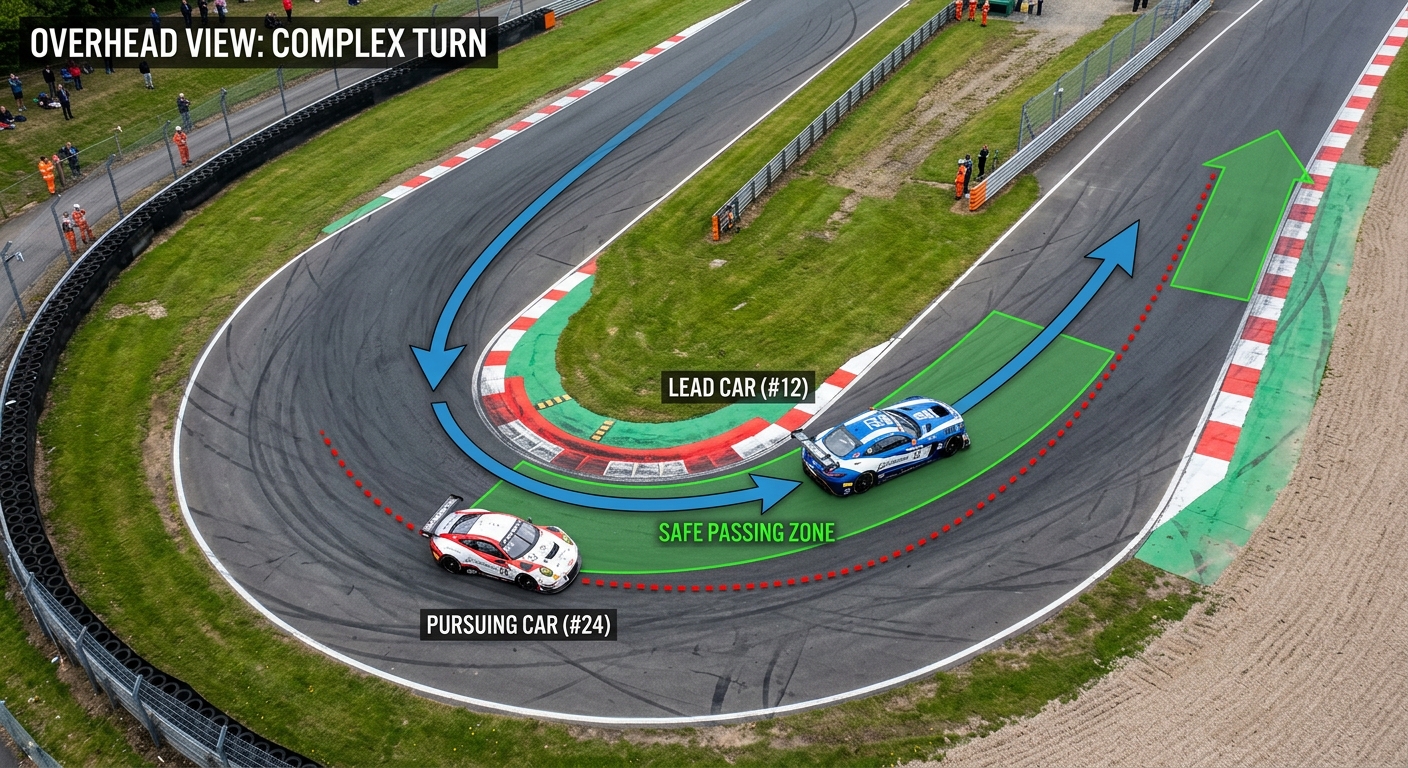
The primary difference between casual gaming and professional stewarding is the human element. Automated systems can be gamed, but human stewards at platforms like FairGrid focus on intent and situational awareness. Learning to drive while anticipating the 'vortex of danger' and understanding the right to the racing line prepares you for the high-pressure environment of a real track. This awareness creates a safety-first mindset that is essential for avoiding common rookie mistakes. When you move to a real track day, your brain is already wired to look for hazards and manage the space around your car effectively.
Experience Professional Stewarding with FairGrid
Ready to sharpen your racing etiquette? Join a FairGrid-managed league to experience professional-grade stewarding that mimics the competitive integrity and safety protocols of real-world motorsport. Elevate your driving standards today.