Equipment Failure or Driver Error? A Steward’s Guide to Hardware Malfunctions2
equipment-failure-vs-driver-error-steward-guide
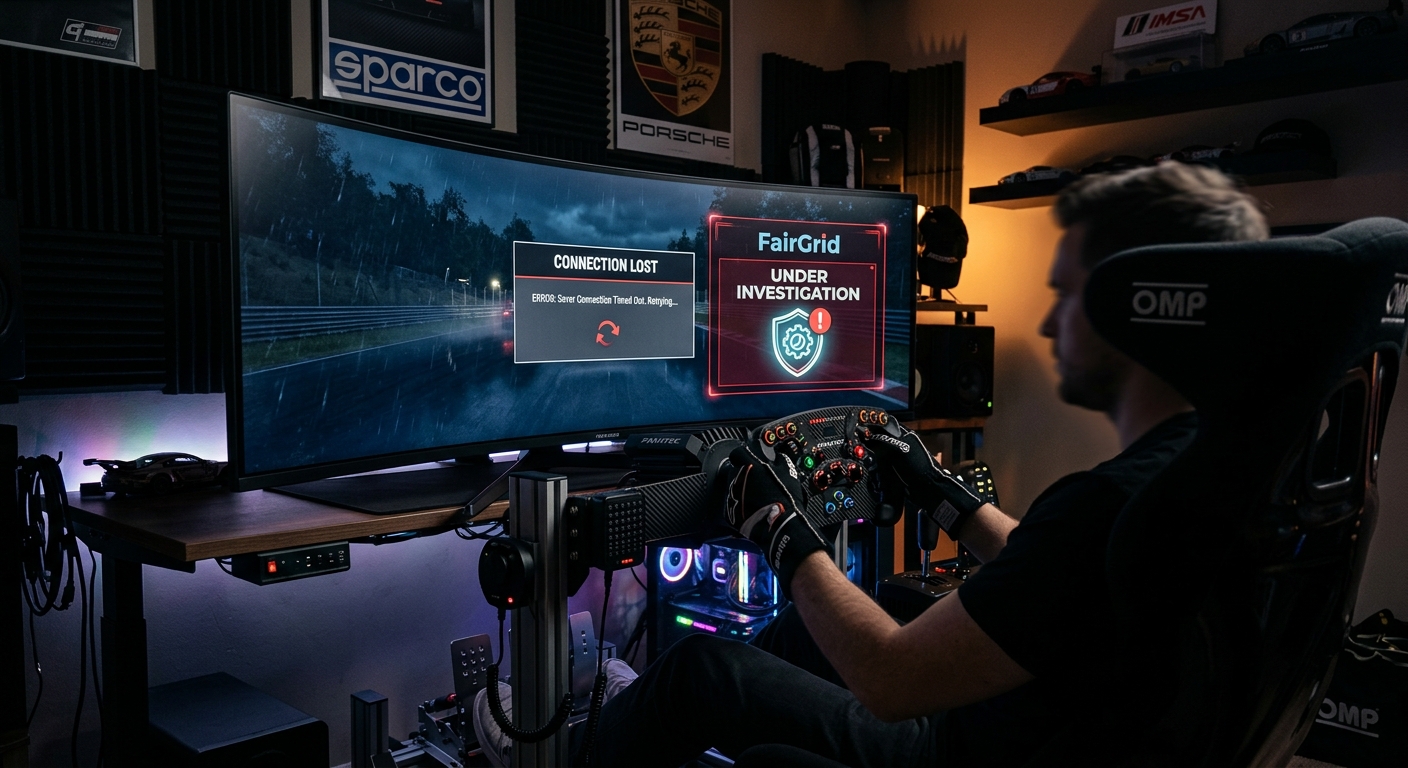
Distinguishing between a technical malfunction and driver error is critical for fair competition.
Learn how sim racing stewards distinguish between genuine hardware malfunctions and driver errors to maintain competitive integrity and fair play in league racing.
The 'Technical Issue' Defense: A Challenge for Modern Race Control
<p>The 'Technical Issue' defense is one of the most common hurdles in modern race control. When a driver misses a braking point and plows into the leader, claiming a pedal flicker or a software stutter is an easy way to deflect blame. Without a standardized approach, stewards are left guessing, which leads to inconsistent rulings and a breakdown in grid trust.</p><p>Competitive integrity relies on the premise that every driver is responsible for the state of their equipment. Just as a real-world racing team is responsible for a mechanical failure, a sim racer must ensure their gear is race-ready. However, because sim racing hardware is prone to unpredictable digital glitches—ranging from EMI interference to USB dropouts—stewards need a nuanced framework to adjudicate these moments fairly.</p>
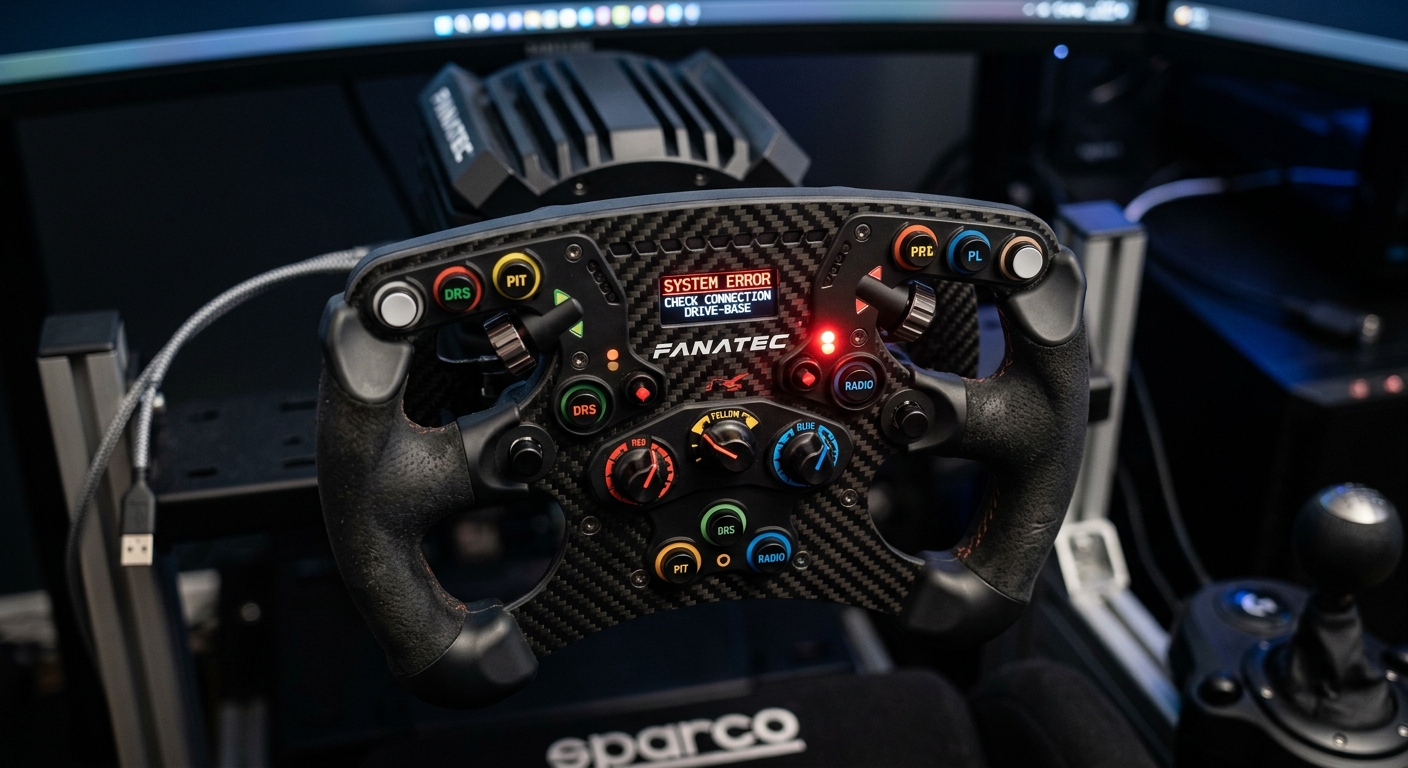
Hardware reliability is a pillar of professional sim racing competition.
Using Telemetry to Validate Claims of Equipment Failure
<p>The most effective way to distinguish between a genuine malfunction and a convenient excuse is through deep data analysis. While a replay shows the <em>result</em> of an incident, telemetry shows the <em>cause</em>.</p><ul><li><strong>Verifying Input Loss:</strong> If a driver claims their brakes failed, telemetry will show if the input signal dropped to 0% despite the physical pedal being depressed, or if the signal remained at 0% because the driver simply forgot to brake.</li><li><strong>Identifying 'Ghost' Inputs:</strong> Flickering potentiometers often leave a distinct 'noisy' signature in the data trace that is nearly impossible to replicate manually.</li><li><strong>Frame Drops and Stutters:</strong> Stewards can often correlate claims of 'screen freeze' with erratic steering inputs or sudden, unexplained throttle cuts in the server logs.</li></ul><p>By shifting the focus from visual replays to data-driven verification, race control can provide objective proof to support or debunk a driver's protest.</p>
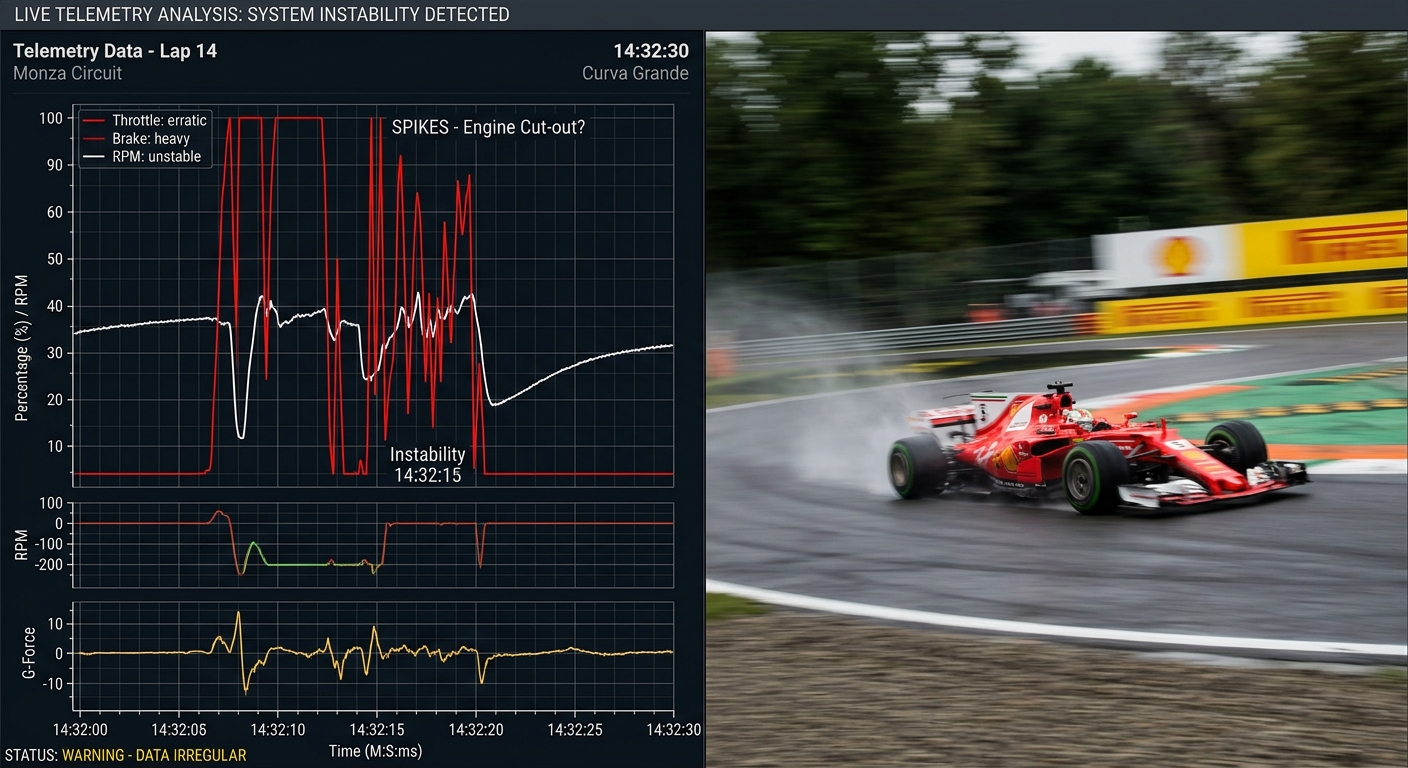
Telemetry provides the objective evidence needed to validate technical protests.
Drafting Fair Rules: Mandatory Penalties vs. Technical DNFs
<p>To minimize the impact of equipment failure on the championship, league organizers should implement clear language in their rulebooks regarding technical malfunctions. Consider the following templates:</p><h3>The Responsibility Clause</h3><p>Drivers are solely responsible for the maintenance and stability of their own hardware and internet connection. An incident caused by hardware failure is generally treated as a driver error unless specific telemetry proof is provided.</p><h3>The Technical DNF Protocol</h3><p>If a driver suffers a persistent hardware failure (e.g., pedals stuck at 100% throttle), they are expected to safely retire the car immediately. Failure to do so, resulting in further incidents, should carry a significantly higher penalty than the initial failure itself.</p><h3>Standardizing Penalties</h3><p>While a steward might grant leniency for a first-time hardware failure that doesn't affect others, any incident that ruins another competitor's race must be penalized. This encourages drivers to upgrade or repair aging gear, like the common G29 potentiometer issues, before entering a competitive lobby.</p>
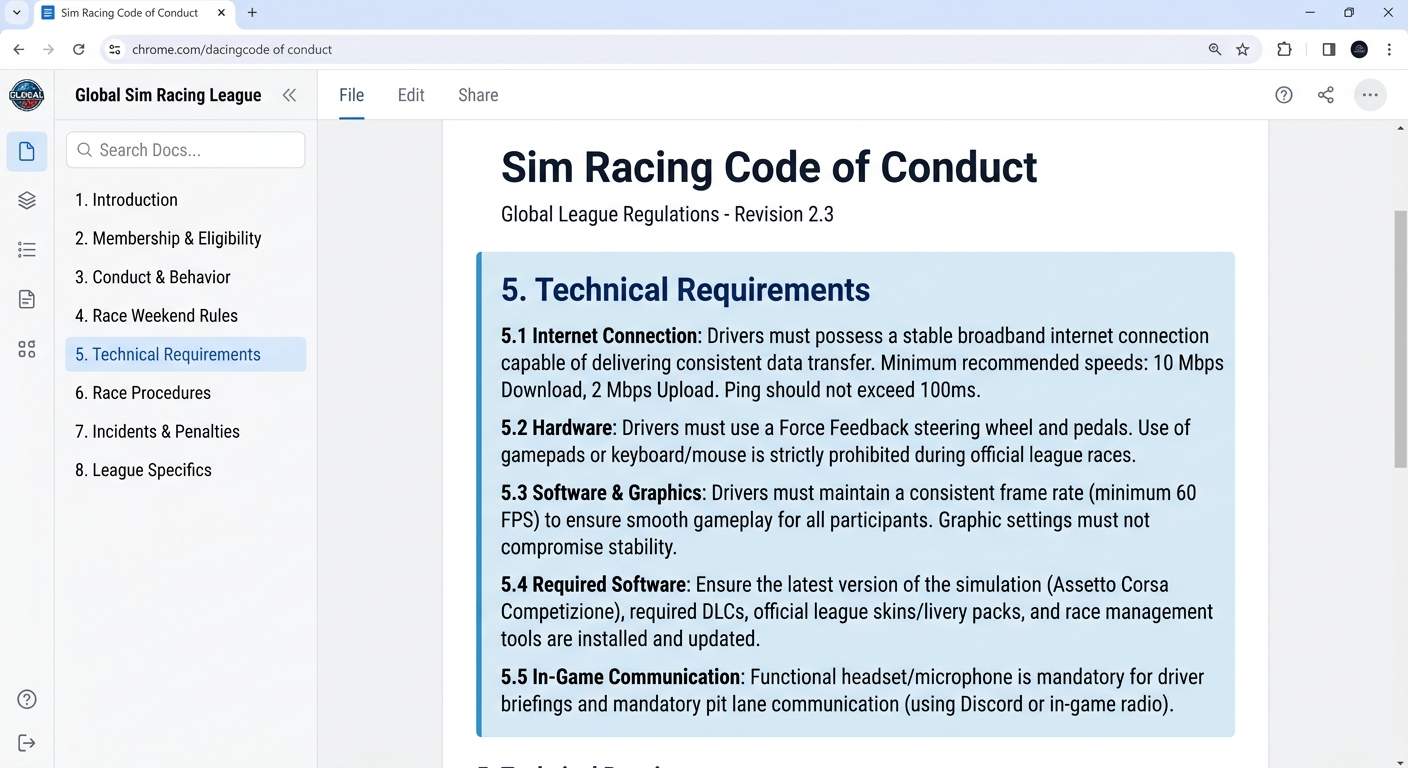
Standardized rulebooks help leagues handle technical incidents with transparency.
How do you prove a hardware failure in a protest?
The most reliable method is submitting telemetry files (like MOTEC or in-game logs) alongside the replay. Stewards look for 'flat-line' input drops or erratic noise patterns that don't match natural human input.
Should a driver be penalized if their wheel disconnects?
Generally, yes. If a disconnection causes an incident with another driver, the 'responsible' party is the one whose equipment failed. This maintains the standard that drivers must ensure their hardware is fit for competition.
How can leagues reduce incidents caused by 'dying' gear?
Leagues can implement 'Hardware Check' sessions or use FairGrid to track recurring technical issues. If a driver has a history of 'technical DNFs,' stewards can mandate a hardware fix before they are allowed to race again.
Future-Proof Your Race Control with FairGrid
Tired of debating 'technical issues' in your stewards' chat? Use FairGrid’s race management tools to document, track, and analyze recurring hardware incidents among your participants. Ensure long-term grid quality by moving from guesswork to data-backed adjudications. Start professionalizing your league today.