FAQ
Is a hardware failure considered a racing incident?
It depends on the league rules, but many high-level leagues treat it as driver error or 'unsafe equipment' because the driver is responsible for their own hardware reliability.
How can a driver prove their wheel cut out?
Drivers should provide telemetry files or a video clip with an input overlay (like OBS) that shows the inputs stopping or behaving erratically during the incident.
Should a driver be penalized for a random FFB drop?
If the drop causes a wreck with other drivers, a penalty is usually warranted to maintain fairness, though it may be less severe than an intentional or reckless move.
What is the difference between mechanical and technical failure?
Mechanical failure is an in-game event (like a blown engine), while technical failure is a real-world hardware or software crash (like a wheel disconnecting).
How do I add hardware failure rules to my league?
Update your rulebook to define the burden of proof for technical claims and specify the penalty for causing incidents due to faulty equipment.
Equipment Failure or Driver Error? How Stewards Should Handle Technical Malfunctions
equipment-failure-vs-driver-error-stewarding
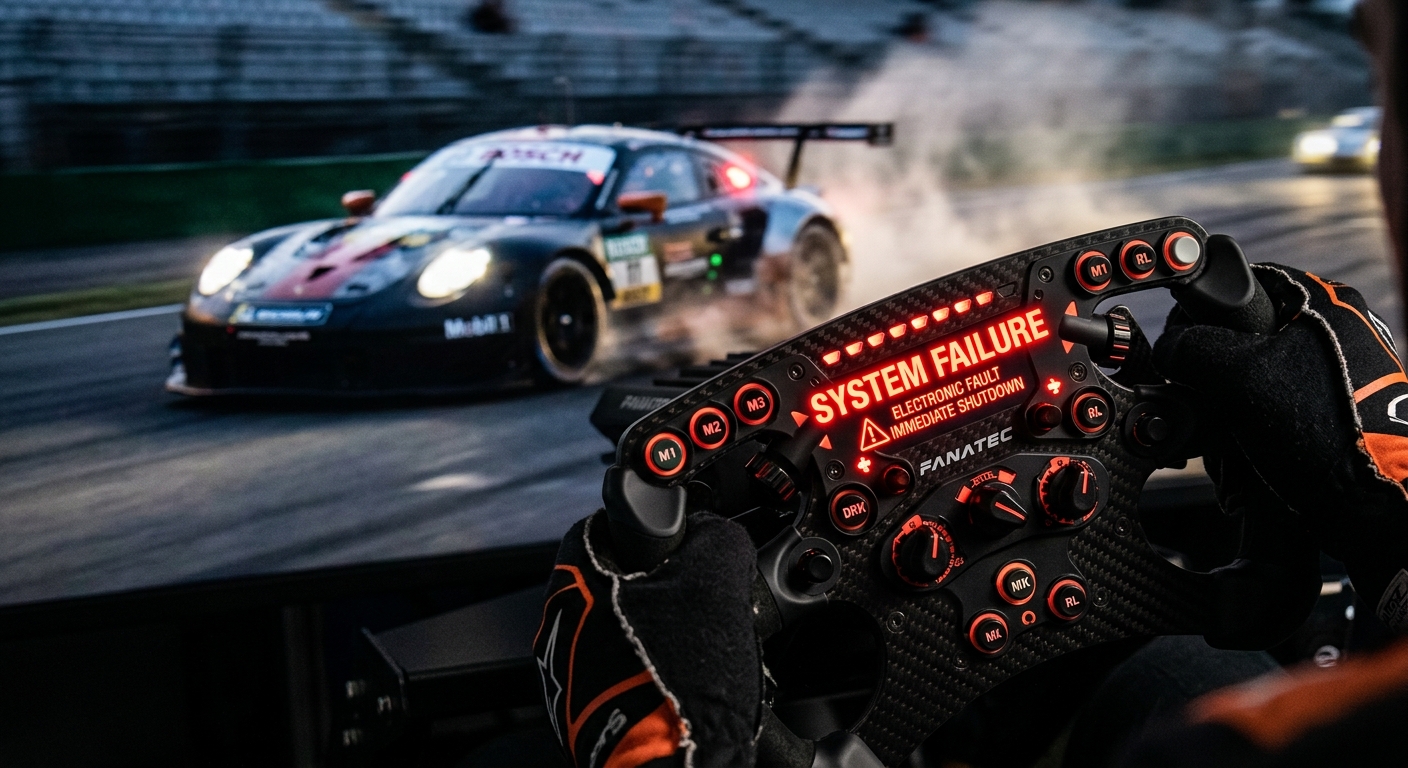
How should stewards handle FFB drops or wheelbase wobbles? Learn to distinguish hardware failures from driver error to maintain competitive integrity in your racing league.
The Steward's Dilemma: When the Sim Meets Reality
The primary distinction stewards must make is between simulated mechanical failure and real-world technical failure. A simulated engine blow-up or suspension snap is part of the racing experience. However, a hardware malfunction—like a Moza R9 FFB cutout or a Fanatec CSL DD wobble—introduces a variable that the game's physics engine didn't intend. Stewards must decide if the driver is at fault for the resulting carnage. Competitive integrity suggests that every driver is responsible for the state of their rig, much like a real-world driver is responsible for the maintenance of their car.
Defining Unsafe Equipment in Your League Rulebook
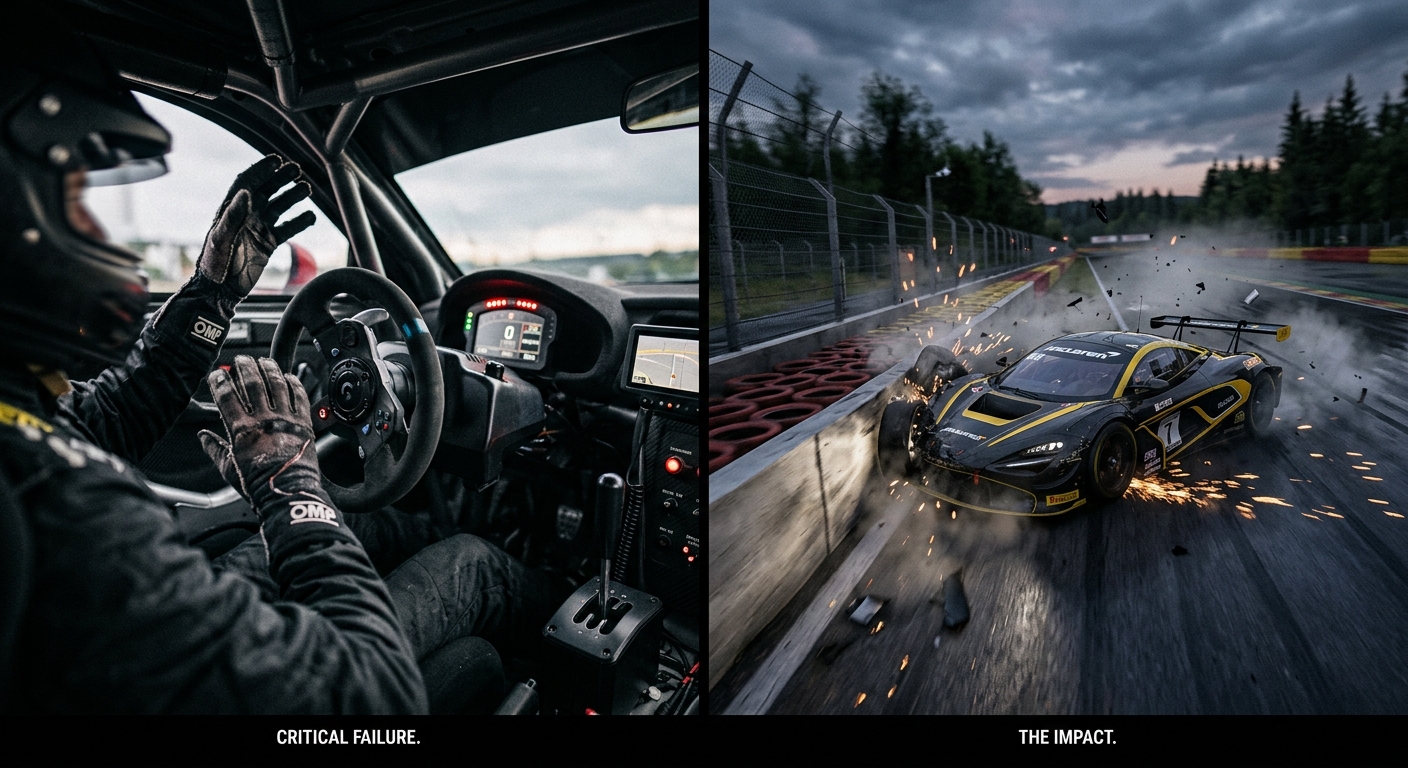
To handle these situations consistently, leagues should incorporate 'Unsafe Equipment' clauses into their penalty guidelines. If a driver knows their wheelbase is prone to overheating or their pedals have flickering potentiometers, continuing to race without addressing the issue can be seen as negligence. Stewards should establish a burden of proof: if a driver claims a technical malfunction, they must provide telemetry or video evidence showing the hardware failure. Without proof, race control must treat the incident as driver error to prevent technical issues from becoming a universal excuse for mistakes.

Using Telemetry and Replays to Verify Technical Claims
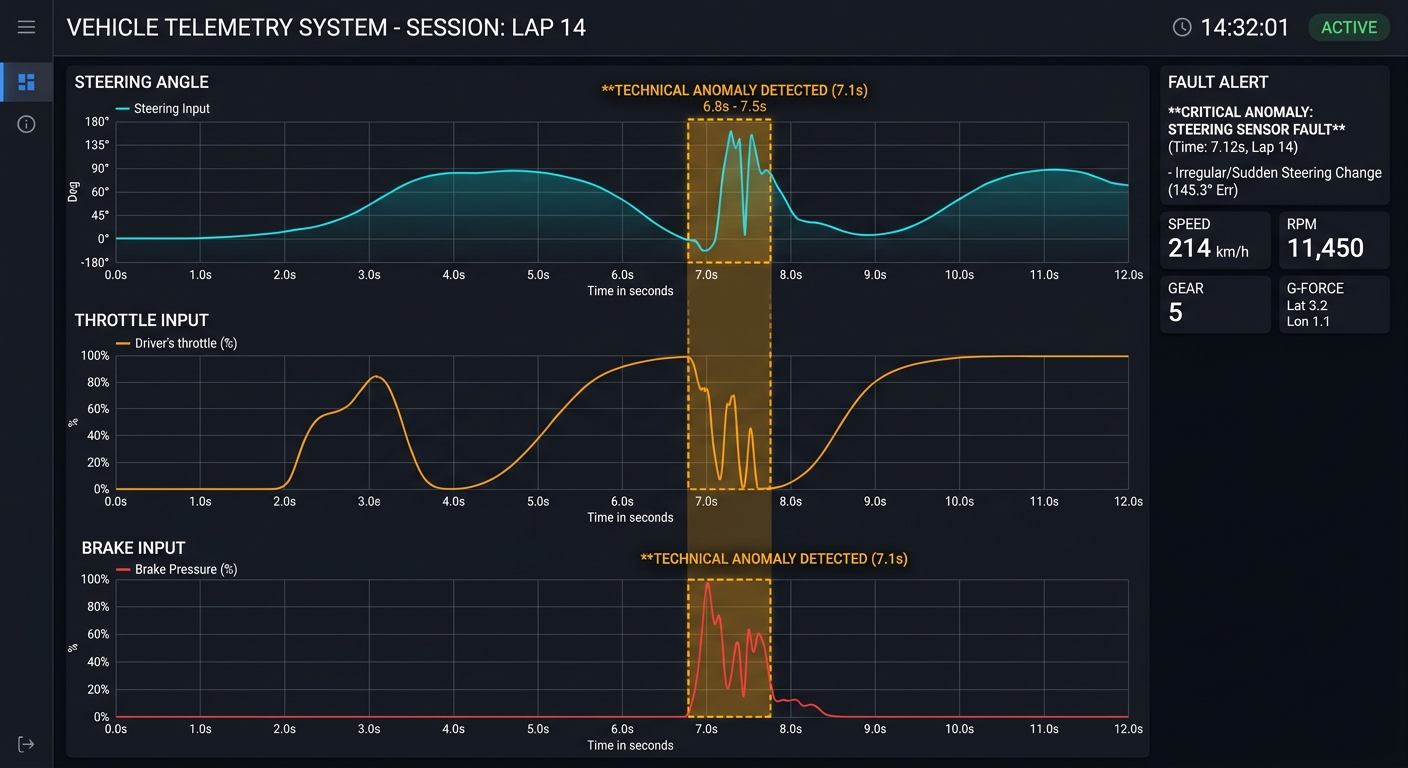
Modern sim racing platforms provide deep telemetry that can act as a black box for stewards. When a protest involves a technical malfunction, race control should look for immediate signs of failure, such as a steering input that suddenly flatlines despite the car's trajectory, or erratic throttle spikes that don't match logical driver behavior. By using FairGrid’s professional stewarding tools, league organizers can streamline this review process. Verifying these claims ensures that penalties are only issued when a driver truly had control, or when they failed to prevent a known hardware issue from endangering others.
Master Your League’s Incident Reviews
Tired of manual protest management and endless hardware excuses? Use FairGrid’s professional stewarding tools to streamline your race control, verify technical claims, and keep your competitive integrity at its peak. Start managing your league like a pro today.