FAQ
Is weaving for tire heat strictly illegal in iRacing?
It is not illegal unless it is erratic, endangers other drivers, or involves crossing into another lane of cars.
Can I be banned for a pace lap crash?
While a single mistake usually results in a warning, a pattern of reckless pace lap behavior can lead to a suspension.
Do tire blankets exist in iRacing sprint races?
Most series in iRacing do not use tire blankets, meaning you must manage your pace carefully on cold tires during the first lap.
What is the best way to warm tires safely?
Dragging your brakes lightly and using smooth, progressive steering inputs within your own lane is the safest method.
How do league organizers track these incidents?
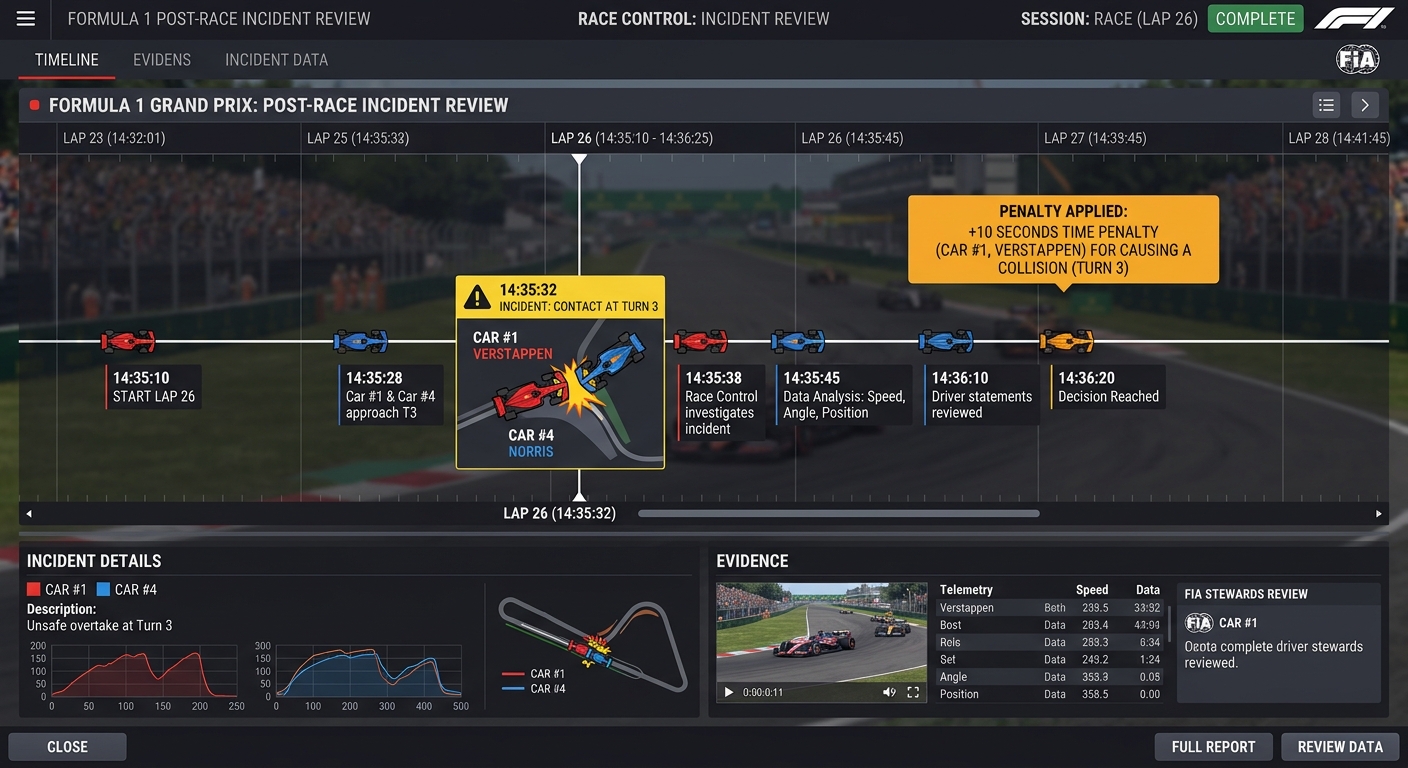
Platforms like FairGrid integrate with sim data to track contact and lane-crossing, making it easier for stewards to issue penalties.
Pace Lap Chaos: Why Your Tire Warming Might Be a Protestable Offense
pace-lap-etiquette-tire-warming-rules

Learn the risks of aggressive tire warming and formation lap etiquette in iRacing to avoid protests and protect your safety rating before the green flag drops.
What the iRacing Sporting Code Actually Says About Formation Laps
The iRacing Sporting Code is clear regarding rolling starts and formation laps. Drivers are required to maintain their starting line and a consistent pace. Section 6.10 specifically highlights that erratic driving, such as extreme weaving or sudden braking during the pace lap, is considered a safety hazard. While the sim allows for some movement, crossing into the other lane or causing the driver behind to react unpredictably is a breach of protocol.
From a stewarding perspective, these incidents are viewed as entirely avoidable. If your 'warming' routine causes a 4x contact or forces another driver off track, you are liable for a protest under the 'reckless driving' or 'intentional wrecking' categories depending on the severity. League organizers often implement even stricter rules, requiring drivers to stay strictly within their lane until the start-finish line to ensure a fair and clean start for the entire field.

The Myth of Tire Warming: Risk vs. Reward in Sim Racing
Many drivers weave aggressively because they believe it significantly increases tire surface temperature. However, in most modern sim racing physics engines, the heat generated by low-speed weaving is negligible compared to the risk of losing control or colliding with a neighbor. The friction generated at 60 mph is rarely enough to bring cold tires into their optimal window, and the cooling effect of the air often offsets the small gains made while weaving.
Professional stewards and top-split drivers generally agree that the reward does not justify the risk. A cold tire is predictable; a damaged wing or a 4x incident from a pace lap collision is a race-ruiner. Instead of aggressive weaving, experienced racers focus on generating brake heat through light, consistent pressure, which radiates into the wheel rims and warms the tire carcasses more effectively and safely than darting across the track.

Best Practices and How to Successfully Protest an Incident
To maintain competitive integrity, drivers should focus on predictability. Stay in your assigned lane, maintain a steady gap to the car ahead, and avoid sudden movements. If you are a league organizer, using tools like FairGrid allows you to automate incident tracking and provide a clear framework for reviewing these pre-race skirmishes. When everyone knows the rules are being watched, the 'heroics' on the pace lap tend to disappear.
If you are a victim of a pace lap incident, filing a successful protest requires evidence. Save your replay immediately and focus the camera on the offending driver's cockpit and steering inputs. Show the erratic lane-crossing or the lack of control. By reporting this behavior, you help improve the quality of the service for everyone and ensure that the focus remains on the actual racing rather than the formation lap.
Take Control of Your League's Integrity
Tired of pace lap chaos ruining your league's broadcast? Use FairGrid to implement professional-grade stewarding workflows, automated incident tracking, and transparent penalty systems. Keep the racing on the track and the drama in the results. Join the future of sim racing management today.