FAQ
Why are procedural tracks challenging for stewards?
Procedurally generated tracks often lack the pre-defined code for track limits, pit lane speed limits, and penalty triggers found in standard circuits.
How do you define track limits manually?
Organizers define limits using visual markers and communicate specific rules in driver briefings, later reviewing incidents manually to ensure compliance.
Can automated systems handle custom tracks?
Automated systems often struggle with custom content as they lack the spatial context or specific data points required to trigger penalties correctly.
What is the role of human stewards in modded content?
Human stewards provide the essential context and consistency that software cannot, ensuring that intent and fairness are considered in every incident.
How does FairGrid help with custom tracks?
FairGrid provides a professional framework for managing protests and penalties, centralizing the stewarding process even when racing on experimental or custom layouts.
Racing Without Borders: Maintaining Competitive Integrity on Custom and Procedural Tracks
racing-without-borders-custom-procedural-track-integrity
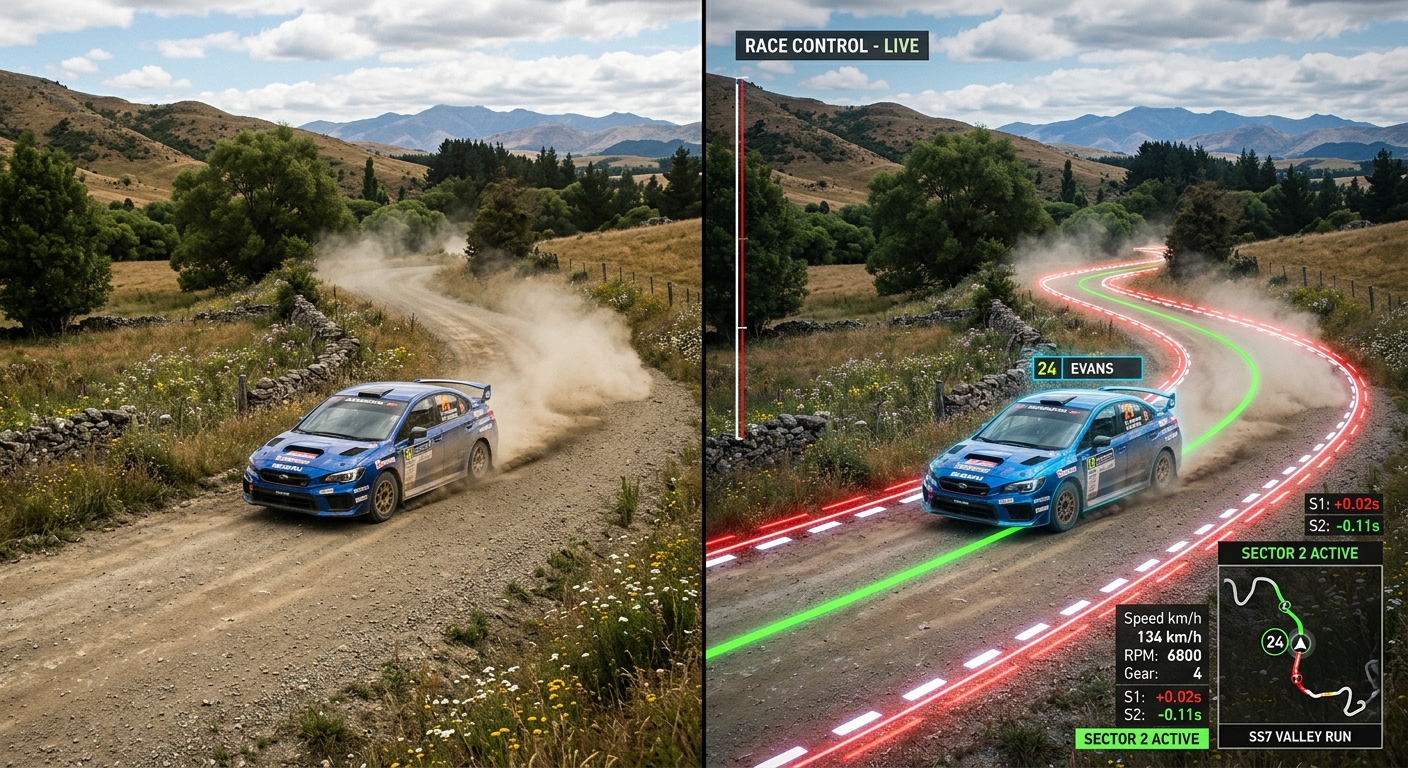
Learn how sim racing leagues maintain competitive integrity and professional stewarding standards when racing on procedurally generated tracks and custom road conversions.
The Stewarding Challenge: Defining Track Limits on Real-World Road Conversions
In a standard licensed circuit, the developers have already baked in the track limits. Crossing a white line or touching a specific curb triggers an automatic warning. On custom or procedurally generated tracks, these definitions are often missing or entirely broken. This creates a technical hurdle where drivers can exploit gaps in the environment to gain time without fear of an automated slowdown. For a league to remain competitive, stewards must manually establish and communicate these boundaries before the green flag drops. This requires a proactive approach to race control, transforming the role from passive observation to active rule-making for every unique environment.
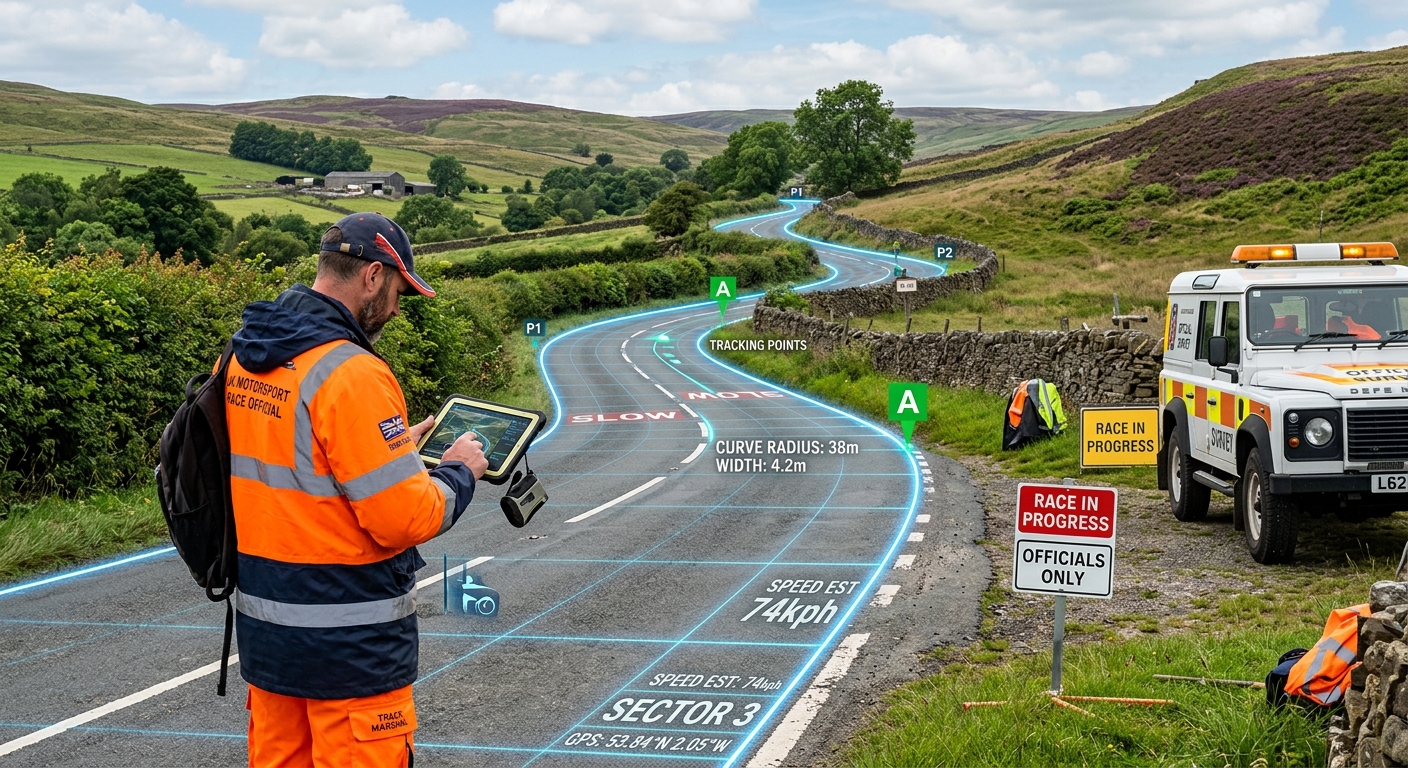
Ensuring Fair Play: Pit Lane Logic and Safety in Unstructured Environments
Beyond the racing line, procedural tracks often lack functional pit lane infrastructure. Issues such as missing speed limiters, undefined entry and exit paths, and the absence of safe rejoin zones can lead to chaotic and dangerous racing conditions. Without the game's code to enforce pit delta times or unsafe release penalties, organizers must implement robust manual frameworks. This involves creating specific protocols for how drivers enter the pits and how they merge back into traffic. Maintaining safety ratings on unconventional circuits is only possible when every participant understands that human oversight will fill the gaps left by the software.
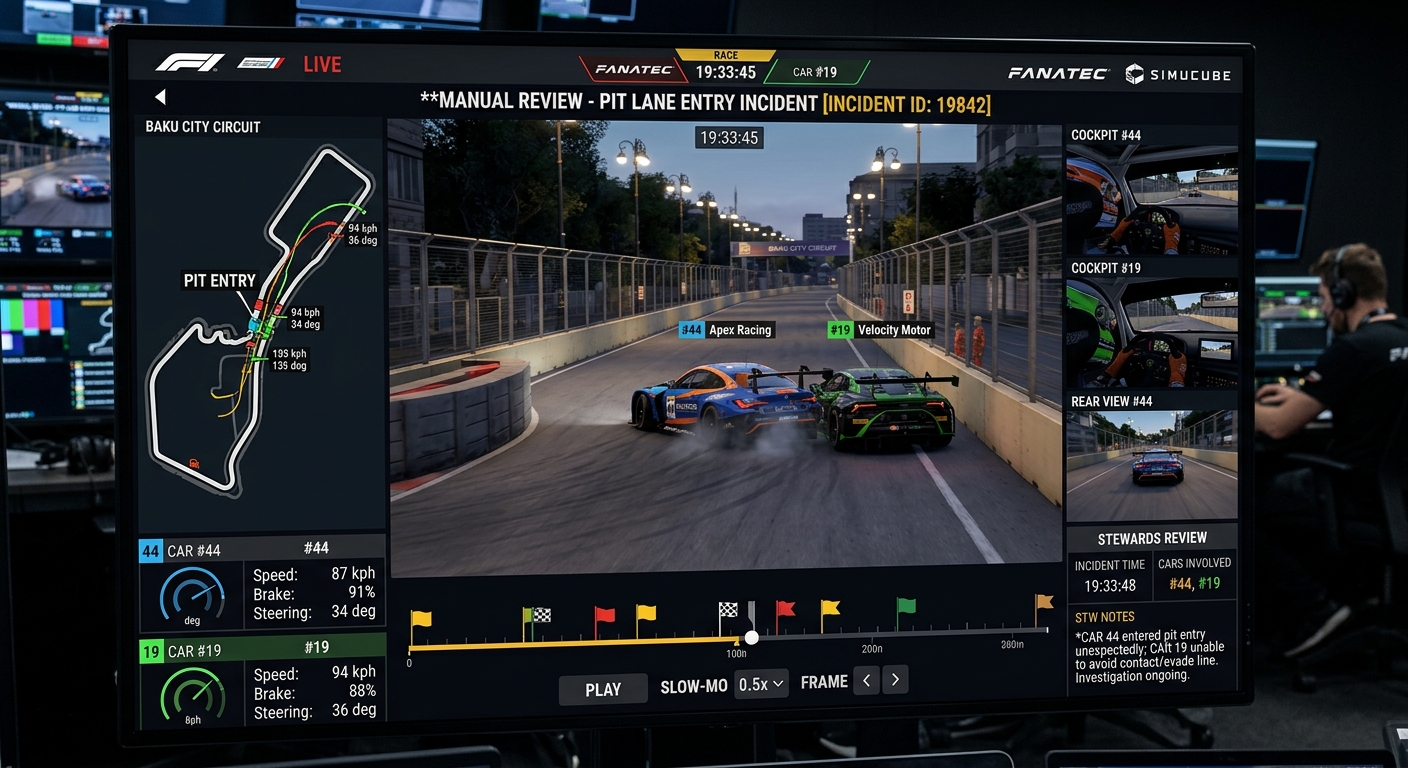
Scaling Integrity: How Professional Race Control Tools Adapt to Custom Content
As leagues move toward more experimental content, the need for centralized stewarding tools becomes critical. Managing protests and penalties across a variety of non-standard tracks can quickly become a logistical nightmare for community managers. Professional race control platforms provide the necessary infrastructure to track incidents, review footage, and apply penalties consistently, regardless of the circuit's complexity. By moving away from decentralized spreadsheets and towards a unified system, leagues can ensure that variety does not come at the cost of fair competition. This professional framework allows organizers to focus on the racing while the software handles the administrative burden of maintaining integrity.
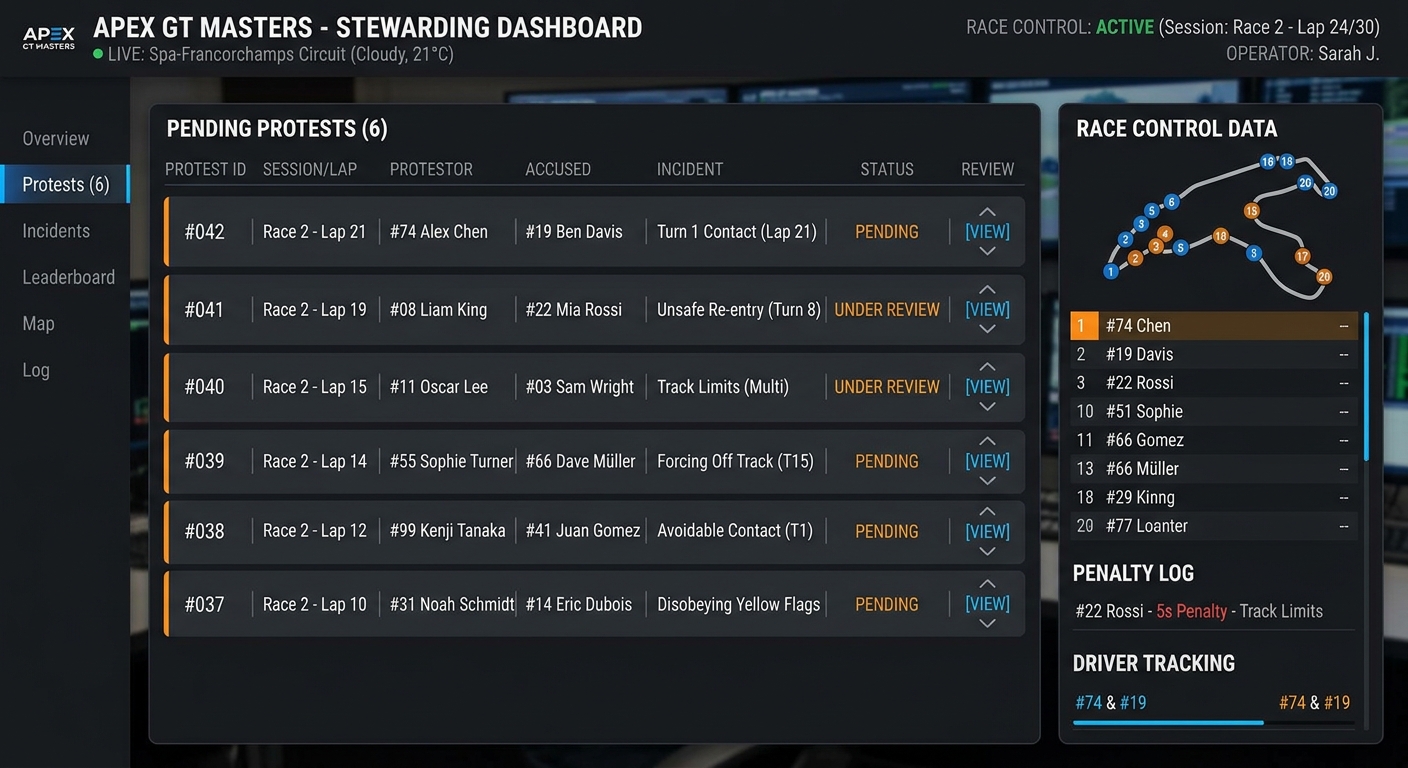
Elevate Your League Integrity with FairGrid
Ready to bring professional-grade stewarding to your custom racing series? FairGrid offers a centralized platform to manage protests, track penalties, and maintain competitive integrity on any circuit, from the Nurburgring to the most obscure procedural road. Start building a fairer racing community today.