FAQ
Does quitting a race early hurt my Safety Rating (SA)?
Yes. Quitting immediately after an incident prevents you from earning Trust points during the remainder of the session, which are necessary to offset the OBWP points gained from contact.
What should I do immediately after causing a crash?
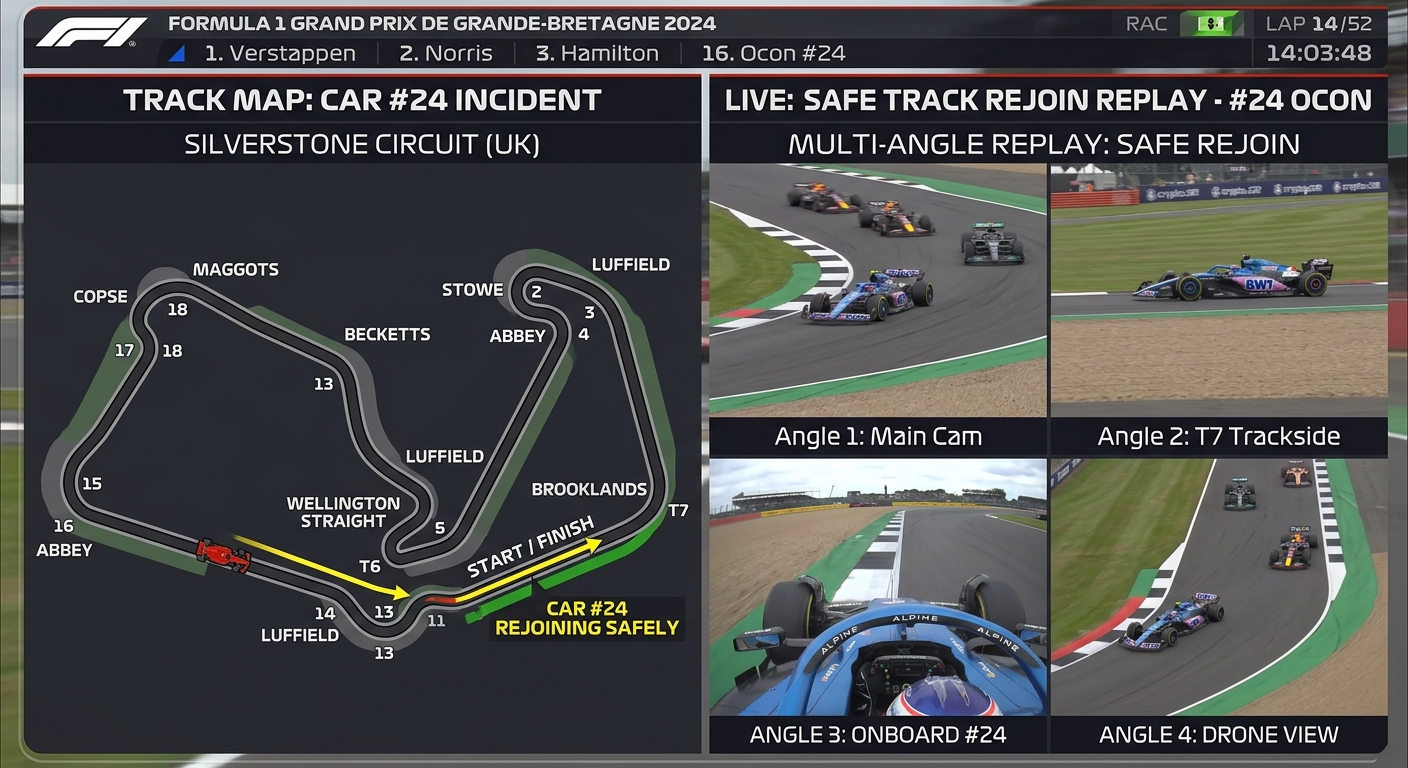
Hold your brakes until the car stops, wait for traffic to pass using your relative overlay, rejoin safely, and finish your race professionally.
Do stewards care if I apologize for an incident?
While an apology does not always negate a penalty, stewards view drivers who take responsibility and communicate professionally more favorably than those who disconnect.
Why is rejoining safely more important than the initial crash?
The initial crash is often a mistake, but a bad rejoin is a choice. Reckless rejoins show a lack of respect for other drivers' safety and time.
How does FairGrid help leagues manage driver behavior?
FairGrid provides automated stewarding workflows and driver behavior tracking, allowing leagues to maintain high standards of integrity and identify consistently safe drivers.
The Anatomy of an Accident: Why Your Reaction to a Crash Defines Your Sim Racing Career
sim-racing-etiquette-incident-responsibility

Learn why your behavior after a sim racing incident defines your reputation. Discover the impact of 'shame quitting' on your safety rating and how to recover professionally.
The Psychology of the 'Shame Quit' in Sim Racing
The shame quit is a common phenomenon driven by a mixture of embarrassment, guilt, and the desire to disappear after a high-profile error. When a driver ruins another person's race, the psychological pressure can be immense. However, disappearing from the server removes the chance for any immediate resolution or learning. Stewards and fellow drivers view quitting as an admission of guilt without the maturity to face the consequences, often leading to harsher social and competitive penalties than the incident itself would have warranted.

How Post-Incident Conduct Affects Your ACC Safety Rating (SA)
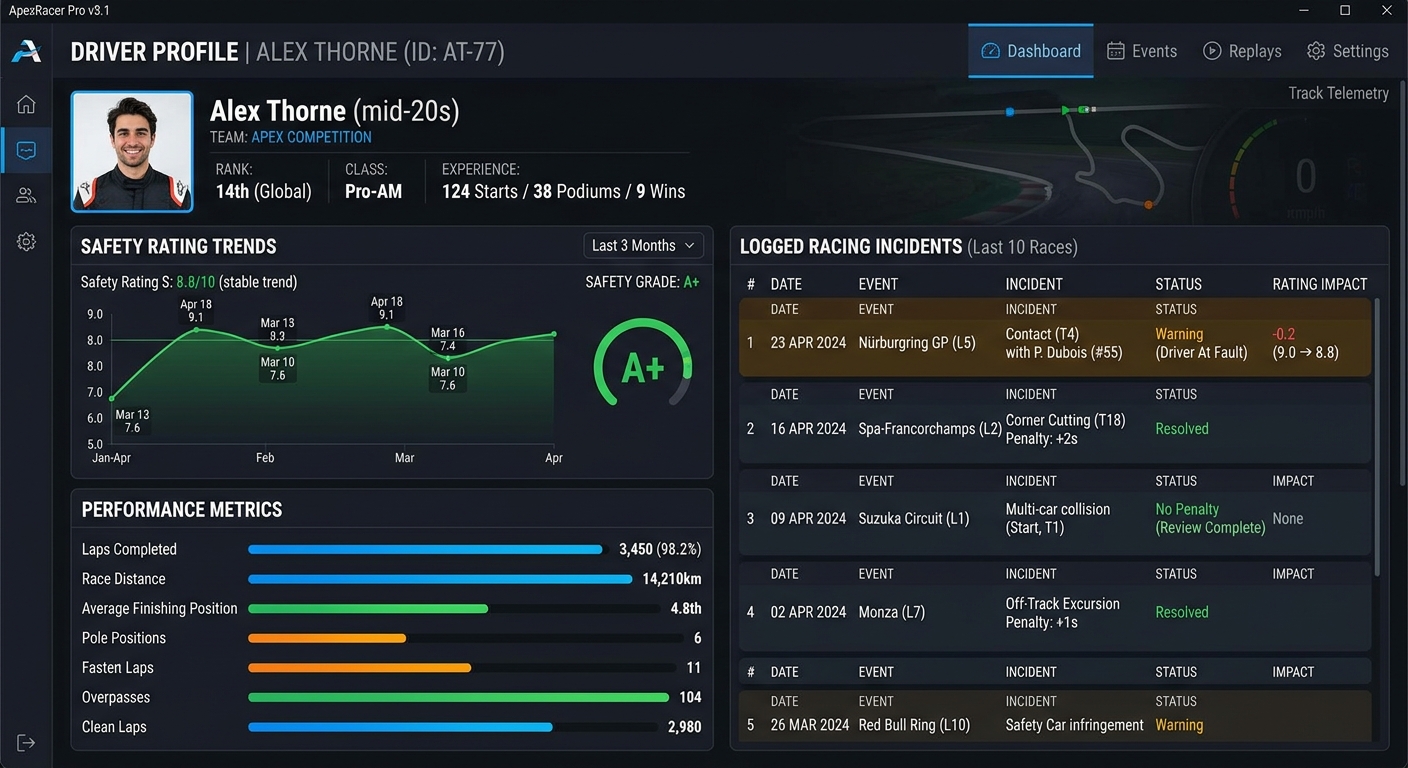
In Assetto Corsa Competizione, your Safety Rating is not just about the contact; it is about how you finish the session. Quitting immediately after an incident prevents the game's algorithm from balancing contact points with clean laps. By staying in the race and completing the remaining laps safely, you can mitigate the damage to your SA. Furthermore, leaving the session makes it impossible for stewards to observe your car's behavior or rejoin technique, which are critical components of a fair investigation and the preservation of competitive integrity.
Professional Recovery: Rejoining and the Steward's Perspective
A professional driver is defined by their recovery. After a spin, the priority is a safe rejoin: holding the brakes until stationary, checking the relative overlay, and waiting for a clear gap. A botched rejoin is often penalized more severely than the initial incident because it is an avoidable choice rather than a racing mistake. Stewards also look for professional communication; while an apology doesn't negate a penalty, taking responsibility demonstrates a commitment to the league's standards. FairGrid empowers leagues to track these behaviors, helping organizers prioritize calm, reliable drivers over volatile ones.
Elevate Your League's Standards with FairGrid
FairGrid empowers sim racing leagues to maintain high levels of competitive integrity through automated stewarding and driver behavior tracking. Ensure every incident is handled fairly and every driver is held to a professional standard by integrating our advanced race control tools.