FAQ
What is the Vortex of Danger?
It is the triangle-shaped area on the inside of a corner where a following car becomes invisible to the lead car's mirrors as they turn toward the apex.
When am I officially entitled to space in a corner?
Typically, you must have significant overlap, usually your front wheels alongside the lead car's rear wheels or mid-section, before the turn-in point.
How do I report an intentional wrecking incident?
In a league environment, save your replay file and submit a formal protest through your platform, including the lap number and driver names.
Why does my Safety Rating (SA) drop even if I didn't start the crash?
Most sims use a 'no-fault' system where any contact results in a penalty to encourage both drivers to actively avoid collisions at all costs.
Is 'sending it' from a distance ever legal?
Only if you can complete the pass without using the other car as a brake and without forcing them off the track to avoid a collision.
Were You Entitled to That Space? A Guide to Sim Racing Stewarding and Incident Analysis
sim-racing-stewarding-rules-guide
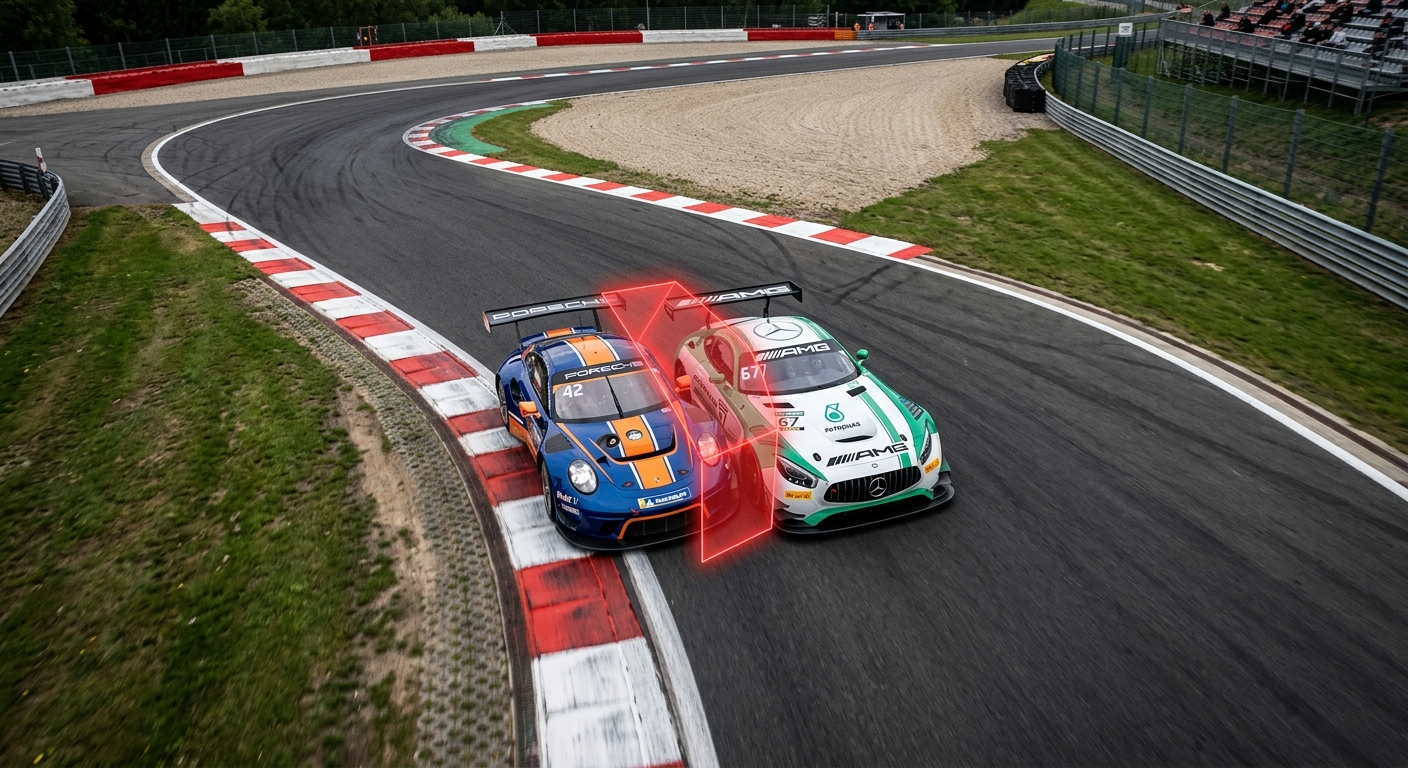
Frustrated by incidents? Learn how to determine racing room rights, avoid the Vortex of Danger, and understand the difference between mistakes and rage in sim racing.
The Golden Rule: When Are You Actually Entitled to Racing Room?
The most common debate in sim racing involves who has the right to a line. Generally, for an overtaking car to be entitled to space, they must have a significant overlap with the car ahead before the turn-in point. In most GT3 leagues, this means having your front wheels alongside the leading car's driver compartment or rear axle. If you simply stick your nose in at the last millisecond without sufficient overlap, you are not entitled to space, and the resulting contact is usually the fault of the attacking driver. Establishing this overlap early allows both drivers to react and navigate the corner safely side-by-side.
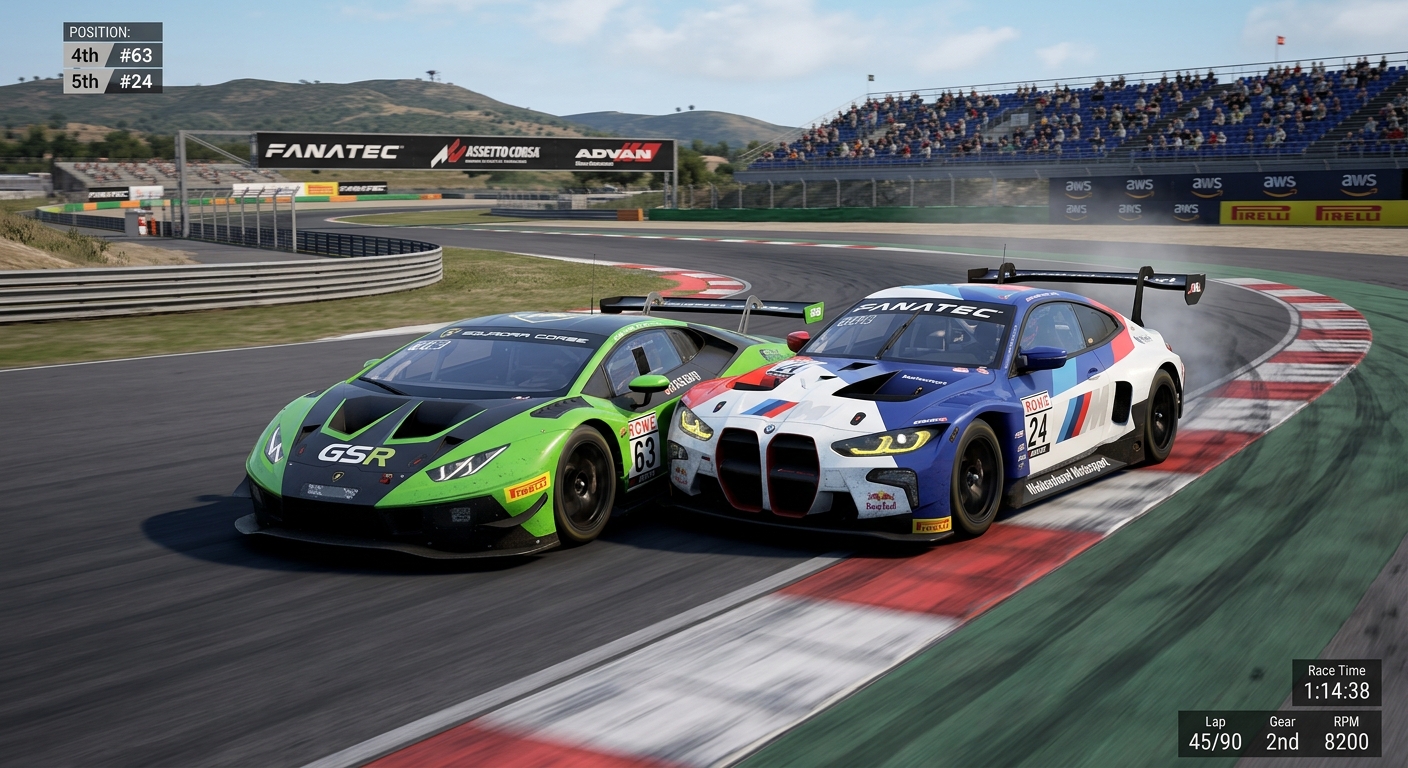
Incident Breakdown: Missed Braking Point vs. Intentional Rage
Stewards must distinguish between human error and malicious intent. A missed braking point often results in a car sailing straight or locking tires, leading to accidental contact. This is a racing incident or a minor penalty. Conversely, intentional rage or 'retaliation' involves a driver deliberately steering into another or failing to brake entirely as a weapon. Analyzing telemetry and steering inputs is crucial. While a missed braking point is a mistake that can happen to anyone, intentional wrecking is a breach of competitive integrity that requires firm disciplinary action to maintain a healthy racing environment.
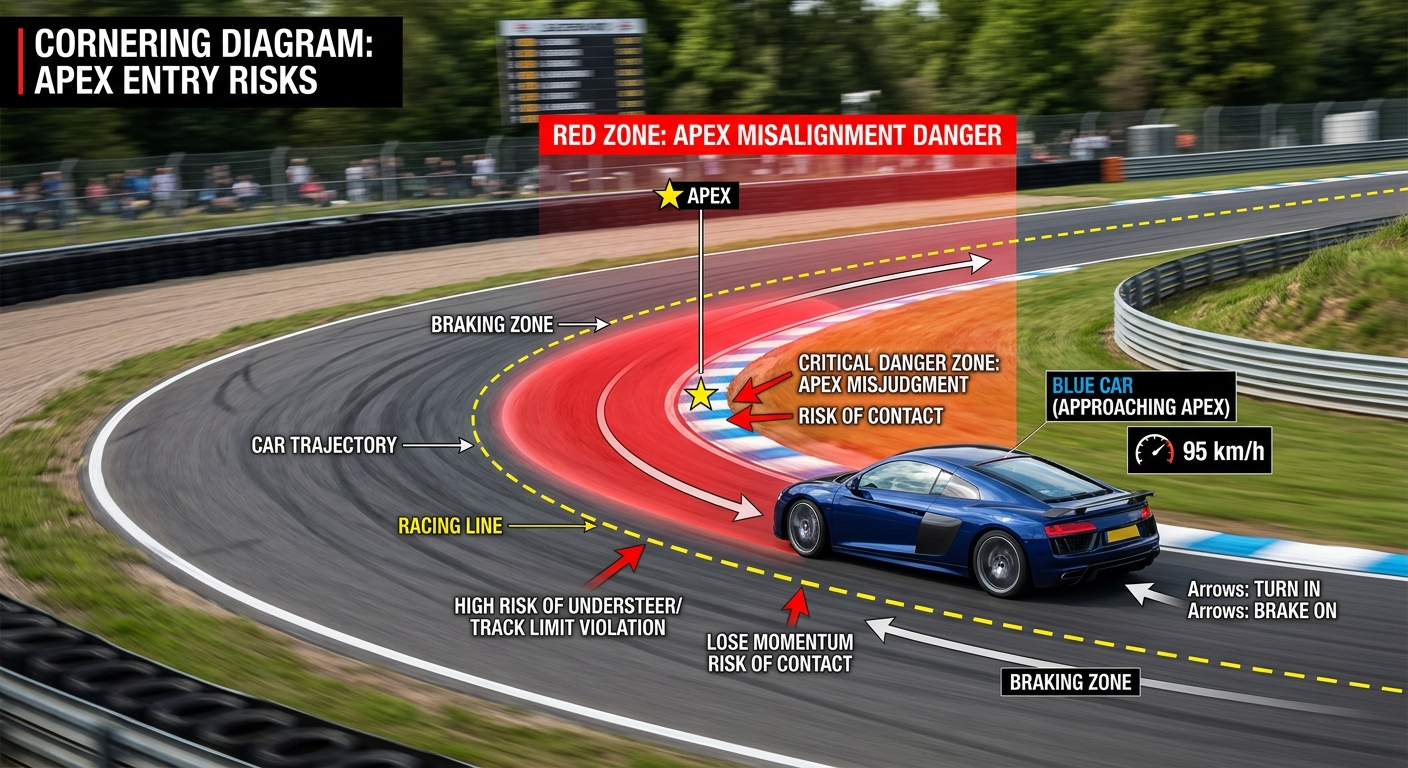
The Vortex of Danger and Why It Ruins Your Safety Rating
The Vortex of Danger is a concept describing the area into which an overtaking car moves during the entry phase of a corner where the lead driver can no longer see them. If you dive into this blind spot late, you are entering a zone where the lead car is already committed to the apex. This is the leading cause of safety rating drops in public lobbies. By the time the lead driver realizes you are there, contact is inevitable. Learning to recognize and stay out of the Vortex of Danger is the fastest way to improve your safety rating (SA) and avoid unnecessary DNFs.

Tired of the Wild West of Public Lobbies?
Don't let poor racing standards ruin your passion for sim racing. Join a FairGrid-managed league where professional AI-assisted stewarding ensures every incident is reviewed and competitive integrity is upheld. Race where the rules actually matter.